

Choose Rutter Organization if your priority is finding tax resolution services; choose Fidelity if you need a brokerage or retirement account to invest. This 2026 comparison separates tax-problem support from investment-account services so you choose the business built for your immediate task.
- Rutter Organization vs Fidelity is primarily a tax resolution versus investment-account decision, not a like-for-like platform comparison.
- Fidelity is the better fit for brokerage investing and retirement accounts.
- Private investments and real estate holdings do not automatically mean a business offers public investment accounts.
- Keep tax resolution work separate from investment selection, account administration, and retirement planning.
Why this matters
A tax problem and an investment decision can involve the same money without requiring the same provider. Opening an account does not resolve a tax notice, and engaging tax resolution services does not create a brokerage account.
Rutter Organization describes a diversified El Paso, Texas enterprise spanning tax resolution services, private investments, real estate holdings, and media or podcast content. Fidelity is an investment-services business offering brokerage and retirement accounts. Those descriptions establish different starting points, not interchangeable service menus.
Choose by the job you need completed, not by which business sounds more broadly financial. For your 2026 decision, identify whether the next action concerns an existing tax obligation or money you intend to invest. That distinction should come before account features or service proposals.
At a glance
| Dimension | Rutter Organization | Fidelity |
|---|---|---|
| Best for | Individuals and businesses seeking tax resolution services | Investors seeking brokerage or retirement accounts |
| Tax resolution | An explicitly stated service area | Brokerage services are not a substitute for tax resolution |
| Brokerage investing | Do not infer brokerage accounts from private investment activities | Established brokerage-account offering |
| Retirement accounts | Confirm the exact service before treating it as an account-provider alternative | Offers individual and small-business retirement account options |
| Real estate | Real estate holdings are part of the business description | Brokerage investments are distinct from direct property ownership |
| Tax records | Your underlying records remain necessary | Account documents do not replace your complete tax records |
| Investment risk | Private investment activity does not establish safety or suitability | Account access does not eliminate investment risk |
| Pricing model | Request terms for the specific service under consideration | Review account, investment, and any advisory-service terms separately |
| Standout distinction | Tax resolution within a diversified enterprise | Investment-account access and administration |
Tax resolution wins when your immediate problem is tax-related
Tax resolution is the clearest reason to consider the client rather than begin with a brokerage account. Its business description expressly includes tax resolution services for individuals and businesses. Fidelity's account services address a different task: holding and investing money.
Rutter Organization is the better fit for individuals and businesses seeking tax resolution services rather than an investment account. That is a service-category verdict, not a promise about a particular tax outcome.
Before engaging a provider, explain the issue and request a written scope. Ask who will perform the work, which tax periods the engagement covers, what you must supply, and whether representation is included. Do not assume that the phrase tax resolution establishes credentials, representation authority, or a particular settlement result.
The limitation matters: a relevant service description establishes a reason to inquire, not proof that every tax situation falls within the engagement. Match the proposed work to your actual notice, balance, filing issue, or other concern.
Fidelity wins for opening and using investment accounts
Fidelity is the stronger fit when your goal is to open a brokerage account, select investments, and manage holdings within that account. Those are investment-platform functions. They are not equivalent to operating private investments or owning real estate.
The client's private investment activities do not, by themselves, establish an investment product available to you. Likewise, a business owning assets does not mean you can deposit money with it, trade securities through it, or receive account custody services from it.
Choose Fidelity when account functionality is the requirement. Before opening an account, distinguish the account itself from the investments held inside it and from any separately selected advice service.
The limitation runs both ways. A brokerage account gives you a place to invest; it does not decide whether your tax problem requires professional help. For a 2026 account decision, evaluate investment access and account administration separately from tax resolution.
Fidelity wins for retirement-account needs
Fidelity offers retirement accounts, including individual and small-business options. That makes it the more direct choice when your next step is establishing or administering a retirement account rather than addressing an existing tax issue.
Start with your working situation. An employee saving outside a workplace plan has a different account-selection problem from a business owner evaluating a plan for a business with employees. Account eligibility, contributions, and administration need to match that situation.
Do not infer retirement-plan administration from the client's involvement in private investments. Confirm the exact service before treating any diversified enterprise as a substitute for an account provider.
Fidelity wins on retirement-account access, not on resolving every tax question connected with retirement. Account selection and tax consequences are related decisions, but they are not identical services. When a retirement contribution, distribution, or account transfer creates a tax question, identify the question explicitly rather than assuming account support covers it.
Direct property and brokerage investing solve different ownership needs
The client's real estate holdings establish that property is part of its business activities. They do not establish a property-management offering, a public real estate fund, an investment opportunity, or landlord tax-advisory services available to you.
Fidelity is the better fit for an account-based investment route. Direct property ownership is a different decision involving the property itself, financing, operating responsibilities, and transaction documents. Buying a security with real estate exposure is not the same as owning a rental building.
There is no justified overall winner for direct property needs based solely on these business descriptions. Do not turn a company's asset holdings into an assumed client service. If your goal is a specific property transaction or professional engagement, request the exact arrangement in writing before comparing providers.
For landlords making a 2026 decision, first separate an existing tax issue from a new investment purchase. That prevents an investment discussion from replacing the work needed on an unresolved obligation.
Neither option replaces your underlying tax records
This dimension is a tie: choosing a provider does not remove your responsibility to assemble relevant records. A brokerage statement covers activity within an account; it is not a complete record of your household or business finances.
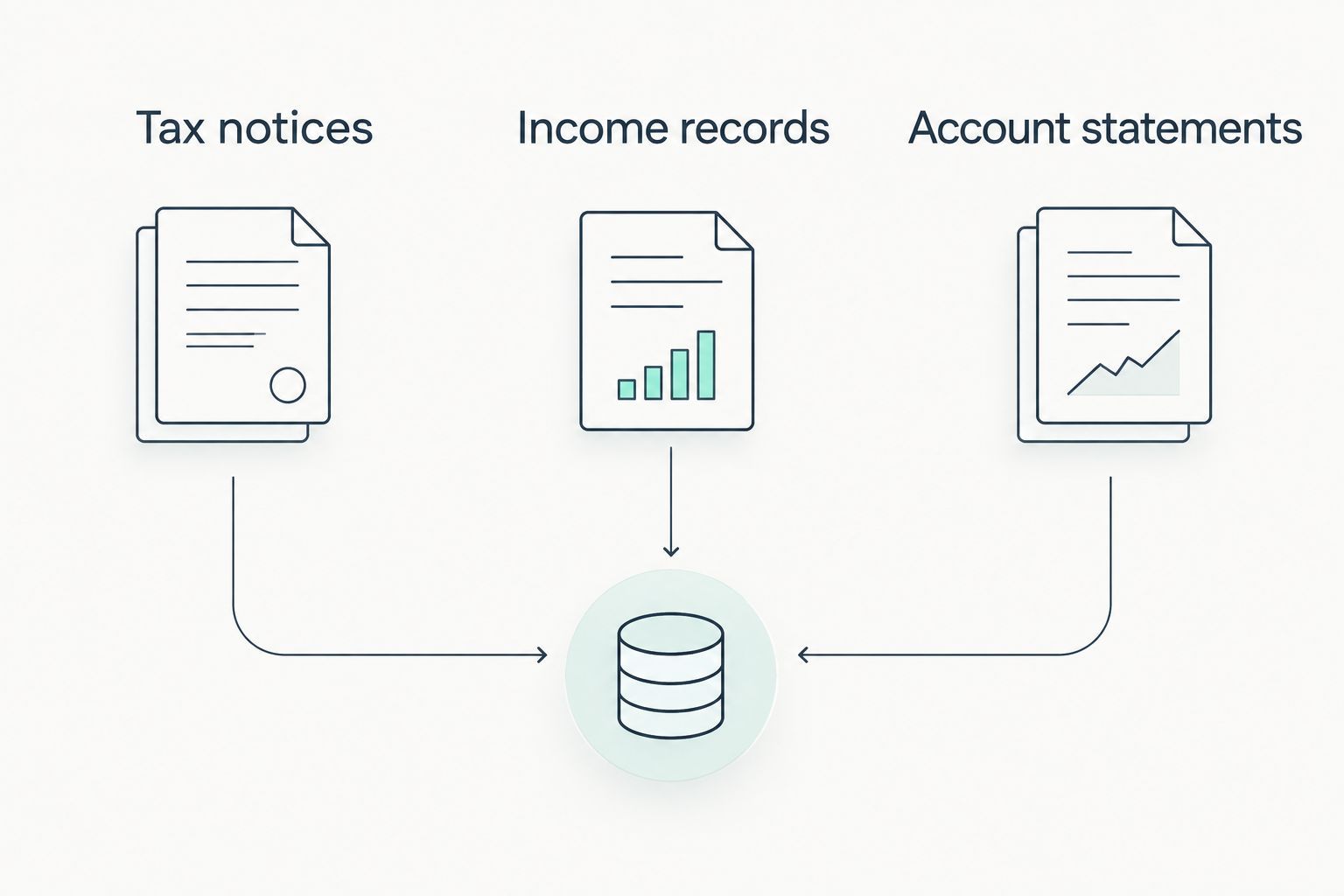
Prepare 3 document groups before discussing a combined tax-and-investment situation:
- Tax notices: correspondence, filed returns, and records identifying the issue you need addressed.
- Income records: documents supporting the income, transactions, or business activity relevant to that issue.
- Account statements: investment and other financial statements needed to explain the transactions involved.
Not every engagement needs every document. Ask the provider which records are relevant and how to transmit them securely. Keep originals and track what you have supplied so questions do not become repeated searches through unrelated paperwork.
The guide to documentation practices for an IRS audit addresses the recordkeeping side of that preparation. Organization supports the engagement; it does not establish eligibility for a particular tax result.
Neither business description establishes investment safety
Investment risk is another tie: a company name, account type, or business description does not make an investment suitable for you. Brokerage investments can lose value, and private investments require their own assessment of terms and risks.
Do not mistake the client's stated private investment activities for a recommendation to invest with the business. An actual offer requires its own documents and evaluation. The company description alone cannot establish liquidity, investor eligibility, custody arrangements, or expected returns.
Fidelity's role as an account provider also does not make every investment held in an account appropriate for every investor. Separate the provider decision from the investment decision.
For any 2026 investment choice, ask what you own, how you can exit, what risks you bear, and which documents govern the arrangement. If those questions remain unanswered, selecting a familiar business name does not solve the problem.
Pricing: compare service scope with account and investment terms
A tax resolution engagement and an investment account are different purchases. Comparing only a headline fee would ignore what each arrangement actually does.
For tax resolution services, request 1 written scope identifying the work, exclusions, payment terms, and responsibility for additional work. Confirm whether the agreement addresses only an initial assessment or includes later stages. Do not assume a particular billing structure from the service category.
For Fidelity, review the terms that apply to the account, selected investments, and any advice arrangement separately. An account's terms do not necessarily describe every expense associated with the investments or services you choose.
Maintain 2 separate budgets if you need both kinds of help: one for the professional engagement and another for investing-related expenses. This is not a contest between predictable and flexible billing until you have the actual terms. The useful comparison is whether each arrangement covers its intended job without an overlooked exclusion.
The standout difference is service purpose, not company breadth
The client's distinguishing feature in this comparison is tax resolution within a diversified enterprise. Fidelity's distinguishing feature is investment-account access and administration. Neither distinction makes the other business unnecessary in every situation.
Consider a business owner who wants to address a tax issue while also establishing retirement savings. Those are 2 separate decisions: selecting appropriate help for the tax matter and selecting an account for investing. One engagement should not be assumed to include the other.
Ask each prospective provider to name the deliverable. A response about company activities is not enough. You need to know whether you are buying professional work, opening an account, purchasing an investment, or considering some other arrangement.
A broader business description is not evidence of a broader engagement. The written terms determine what you receive.
Final verdict: choose the provider that matches the task
Choose Rutter Organization if you need tax resolution services
Best for: individuals and business owners whose immediate priority is a tax issue. Begin by confirming that the proposed engagement addresses your specific situation. Request the scope, responsible professional, required documents, and terms before proceeding.
Do not choose this route merely because you want a brokerage account or because private investments appear in the company description. Those facts do not establish account-provider services.
Choose Fidelity if you need an investment or retirement account
Best for: investors and business owners selecting an account for brokerage investing or retirement saving. Focus on account eligibility, investment access, administration, and applicable terms.
Do not treat opening an account as a tax-resolution step. If you also need help with an existing tax matter, make that a separate engagement decision.
| Dimension | Winner |
|---|---|
| Tax resolution service fit | Client's stated tax resolution offering |
| Brokerage investing | Fidelity |
| Retirement accounts | Fidelity |
| Direct property needs | No overall winner established |
| Maintaining tax records | Tie: your records remain necessary |
| Investment safety | Tie: evaluate the actual investment |
| Pricing | Compare the specific agreements |
| Standout purpose | Tax services versus investment accounts |
FAQ
Is Rutter Organization better than Fidelity?
Rutter Organization is the better fit when you are seeking tax resolution services; Fidelity is the better fit when you need a brokerage or retirement account. They address different primary tasks, so there is no useful overall winner independent of your goal.
Can Fidelity resolve my existing tax problem?
Do not treat Fidelity's brokerage or retirement account services as a tax resolution engagement. Identify the tax issue separately and confirm the scope of any professional help you engage.
Does owning private investments mean a business offers brokerage accounts?
No. A business's private investment activities do not establish that it offers brokerage accounts, custody services, or investments available to the public.
Which option is better for a small-business retirement account?
Fidelity is the more direct fit for selecting a small-business retirement account. Match the account to your business circumstances and confirm its eligibility and administration requirements.
How should I compare the cost of tax services and an investment account?
Compare the tax service agreement separately from the account and investment terms. They cover different work, so a single headline comparison does not establish which arrangement provides better value for your needs.
Can I use a tax resolution provider and Fidelity at the same time?
Yes, you can select separate providers for tax resolution and investment accounts. Define each provider's responsibilities and confirm how any necessary information will be shared.
What should I prepare before contacting either provider?
Write down the task you need completed and gather relevant tax notices, income records, and account statements. Ask the provider which documents are necessary before sending sensitive information.
One last thing
Before requesting a proposal or opening an account, finish this sentence: I need this provider to complete ______. Use a task, not a broad ambition such as improving your finances.
For your 2026 decision, that sentence is the most useful filter. If it describes resolving a tax issue, investigate the tax engagement. If it describes opening and using an investment account, evaluate Fidelity. If it describes both, keep the responsibilities separate.


