

Best overall: an IRS installment agreement when you can repay the balance. Best for financial hardship: currently not collectible status. Best for reducing penalties: penalty relief. The best alternatives to IRS offer in compromise depend on whether you need payment time, collection relief, or a correction to the amount owed in 2026.
- The best alternatives to IRS offer in compromise start with installment agreements for manageable tax debt.
- Currently not collectible status addresses hardship; it does not forgive the tax balance.
- Partial payment installment agreements suit taxpayers who can pay something but cannot repay everything before collection expires.
- Penalty relief and assessment disputes address different problems: penalties versus an incorrect tax bill.
- The Rutter Organization provides tax resolution services for individuals and businesses comparing IRS tax relief options.
Why this matters
An offer in compromise is a settlement, not the default answer to every unpaid tax bill. The IRS evaluates eligibility and financial circumstances; owing more than you want to pay does not establish that you qualify.
Match the remedy to the problem before submitting an application. A payment arrangement addresses cash flow. Hardship status addresses inability to pay. A dispute addresses a bill that is wrong. Choosing the wrong route leaves the underlying issue unresolved.
The Rutter Organization provides tax resolution services to individuals and businesses. For a 2026 decision, separate the amount legally owed from the amount you can afford to pay before choosing a resolution route.
What makes the best offer in compromise alternative
Use these criteria to compare IRS tax relief options:
- Accuracy of the debt: Determine whether the assessed tax, penalties, and credited payments are correct.
- Monthly affordability: Compare reliable income with necessary living expenses, not an optimistic budget.
- Asset position: Account for equity and accessible funds; income alone does not establish hardship.
- Collection timing: Check the remaining collection period and events that suspend or extend it.
- Compliance requirements: Identify missing returns, current estimated payments, and required business deposits.
- Resolution scope: Distinguish paying the debt, delaying collection, reducing penalties, and disputing liability.
The IRS generally has 10 years from assessment to collect a tax liability, subject to exceptions and suspension events. That is not the same as 10 years from filing the return. Different assessments can have different expiration dates.
IRS offer in compromise alternatives at a glance
| Option | Best for | Standout feature | Key limitation |
|---|---|---|---|
| IRS installment agreement | Taxpayers who can repay through scheduled payments | Spreads repayment over time | Interest and applicable penalties continue |
| Currently not collectible status | Taxpayers unable to pay necessary living expenses and tax debt | Generally pauses active collection for hardship | Does not cancel the debt |
| Partial payment installment agreement | Taxpayers with some payment capacity but insufficient capacity for full repayment | Payments based on documented ability to pay | Financial review can change the payment |
| Penalty relief | Taxpayers with eligible penalties | Removes qualifying penalties | Does not eliminate underlying tax |
| Assessment dispute | Taxpayers with an incorrect tax bill | Challenges the amount or basis of liability | Requires evidence and the correct procedure |
| Bankruptcy evaluation | Taxpayers facing broader insolvency and potentially dischargeable taxes | Addresses qualifying debts through a court process | Many tax debts survive bankruptcy |
These options do not all compete with each other. Penalty relief can accompany a payment agreement, while a dispute can establish the correct balance before you choose how to resolve it.
1. IRS installment agreement: best for manageable monthly payments
An IRS installment agreement lets you pay an assessed balance through scheduled payments rather than a settlement. It is the default starting point when your budget supports repayment and the balance is correct.
For 2026 planning, distinguish a longer-term installment agreement from the IRS short-term payment option, which provides 180 days or less to pay. Do not choose a deadline that your cash flow cannot support.
IRS installment agreement pros:
- Creates a scheduled repayment arrangement.
- Avoids the need to establish eligibility for a compromise settlement.
- Offers a route for taxpayers whose issue is timing rather than inability to repay.
IRS installment agreement cons:
- Interest and applicable penalties continue until the balance is paid.
- Missed payments or new unpaid taxes can jeopardize the agreement.
- Some arrangements require detailed financial information.
Check the payment against ordinary household expenses and current tax obligations. An agreement that consumes the money needed for this year's taxes creates another balance instead of resolving the first one.
Best for: Taxpayers who can repay the correct balance through sustainable payments.
Verdict: Choose an IRS installment agreement when repayment is realistic.
2. Currently not collectible status: best for financial hardship
Currently not collectible status means the IRS determines that collection would cause financial hardship. The balance remains due, but the IRS generally suspends active collection while the status applies.
This is not a settlement. You must document why paying the IRS would prevent you from meeting necessary living expenses, and the IRS can review your circumstances later.
Currently not collectible status pros:
- Addresses inability to pay rather than forcing an unaffordable payment.
- Generally pauses active collection while hardship status applies.
- Does not require a settlement payment to resolve the immediate hardship issue.
Currently not collectible status cons:
- Interest and applicable penalties continue.
- The IRS can apply refunds to the outstanding balance.
- Collection can resume if your financial circumstances improve; a tax lien remains possible.
In 2026, prepare income records, expense documentation, and asset information before requesting hardship treatment. A low bank balance by itself does not explain your full financial position.
Best for: Taxpayers who cannot pay tax debt and necessary living expenses.
Verdict: Choose currently not collectible status for documented hardship, not debt forgiveness.
3. Partial payment installment agreement: best for limited payment capacity
A partial payment installment agreement addresses a specific middle ground: you can make payments, but cannot fully repay the liability before the collection period expires. The IRS evaluates your financial information and remaining collection time.
Unlike an offer in compromise, this arrangement does not settle the debt for a fixed accepted amount. It remains a payment agreement, and changes in your finances can affect what the IRS requires.
Partial payment installment agreement pros:
- Provides a route when full repayment is beyond documented capacity.
- Connects payments to financial circumstances.
- Avoids treating every taxpayer as either fully able or completely unable to pay.
Partial payment installment agreement cons:
- Requires financial disclosure and supporting records.
- The IRS generally reviews financial circumstances every 2 years.
- Payments can increase after review, and interest continues to accrue.
Do not estimate the remaining collection period from memory. Suspensions and separate assessment dates affect the calculation, and the financial review can include whether assets should be used to pay the balance.
Best for: Taxpayers with some disposable income but insufficient capacity for full repayment.
Verdict: Choose a partial payment evaluation when standard repayment does not fit your finances.
4. Penalty relief: best for reducing eligible penalties
Penalty relief removes qualifying penalties; it does not compromise the underlying tax. The IRS considers routes including first-time abatement and reasonable-cause relief, depending on the penalty and your circumstances.
This option belongs alongside a debt-resolution plan when penalties form part of the balance. Approval does not automatically remove every penalty or all interest.
Penalty relief pros:
- Targets charges that qualify for removal.
- Can accompany an installment agreement or another collection resolution.
- Provides distinct routes based on compliance history or the reasons for noncompliance.
Penalty relief cons:
- Does not remove the underlying tax liability.
- Different penalties have different relief rules.
- Reasonable-cause requests require an explanation supported by the facts.
For a 2026 request, identify the exact penalty, affected tax period, and applicable relief route. Describe what happened, when it happened, and how it prevented compliance rather than submitting a general statement about financial stress.
The IRS does not treat lack of funds alone as reasonable cause for failing to file a return.
Best for: Taxpayers whose balances include penalties eligible for relief.
Verdict: Choose penalty relief as a targeted reduction, not a substitute for resolving unpaid tax.
5. Assessment dispute: best for an incorrect tax bill
An assessment dispute challenges whether you owe the amount the IRS claims. Depending on the case, the appropriate route can involve responding to a notice, requesting audit reconsideration, pursuing an appeal, or correcting a return.
An offer based on inability to pay does not establish that an assessment is accurate. If the bill is wrong, identify the procedural route for correcting it before deciding how to pay.
Assessment dispute pros:
- Addresses incorrect income, deductions, credits, or payment treatment.
- Uses records to establish the correct liability.
- Keeps an affordability problem separate from a liability disagreement.
Assessment dispute cons:
- Requires evidence, not just disagreement with the balance.
- Deadlines and available procedures vary by notice and case stage.
- A dispute does not automatically stop every collection action.
Read the notice before choosing a response. Gather the return, income documents, payment confirmations, and correspondence connected to the disputed issue. A proposed adjustment is not the same procedural situation as an already assessed balance.
Best for: Taxpayers with a factual or legal reason to challenge the tax bill.
Verdict: Choose the correct dispute procedure when the liability is wrong.
6. Bankruptcy evaluation: best for broader insolvency
Bankruptcy is a court process for resolving qualifying debts, not an IRS payment program. Some income tax debts can be discharged when legal requirements are satisfied, while many tax obligations remain collectible afterward.
Consider this route when tax debt is part of a wider insolvency problem. A bankruptcy attorney must evaluate the tax type, return history, assessment timing, liens, and other debts.
Bankruptcy evaluation pros:
- Examines qualifying tax and non-tax debts together.
- Can discharge eligible income tax liabilities.
- Provides a formal legal process for addressing insolvency.
Bankruptcy evaluation cons:
- Many tax liabilities are not dischargeable.
- Tax liens can survive discharge.
- Filing has legal and credit consequences beyond the IRS balance.
Do not file bankruptcy solely because someone describes your taxes as old. Age alone does not establish dischargeability, and missing or late returns require particular attention.
Best for: Taxpayers with broader insolvency and potentially dischargeable tax debts.
Verdict: Seek a bankruptcy evaluation when the problem extends beyond an IRS payment arrangement.
Put the options in the right order
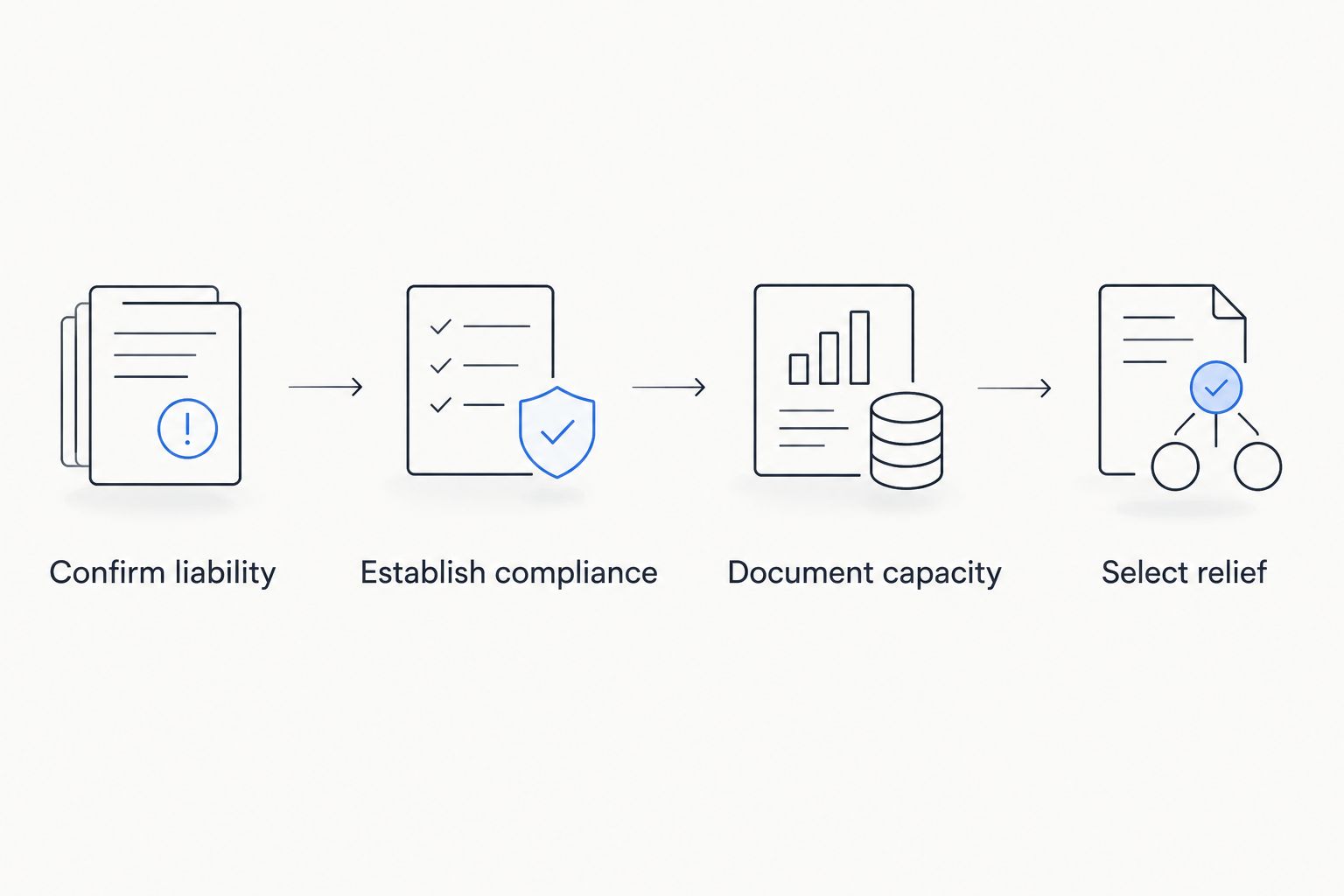
In 2026, start with the facts that determine eligibility, not the resolution you hope to receive. The Rutter Organization's tax resolution services are relevant to individuals and businesses evaluating these IRS offer in compromise alternatives.
Confirm liability
Match IRS notices and account records to filed returns and payment evidence. Separate proposed changes from assessed balances, and identify any response deadline before discussing payment terms.
Establish compliance
Identify unfiled returns and current tax obligations. Use the guide to handling unfiled tax returns to organize that issue before treating the balance as ready for resolution.
Document capacity
List reliable income, necessary expenses, assets, and other obligations. Separate an occasional shortfall from an ongoing inability to pay; the same bank balance can conceal very different circumstances.
Select relief
Compare full repayment, partial repayment, hardship status, and targeted penalty relief against the documented facts. If the liability is disputed or insolvency extends beyond taxes, address those issues through the appropriate specialist.
Keep copies of every submission and track response deadlines separately from payment dates. A pending request is not permission to ignore new correspondence or current tax obligations.
How the alternatives are ranked
This ranking prioritizes matching the remedy to the problem: manageable repayment first, then hardship, limited repayment capacity, targeted penalty reduction, incorrect liability, and broader insolvency. It is not a ranking of which option removes the most debt.
The rules described here follow IRS guidance on payment plans, temporary collection delays, partial payment installment agreements, penalty relief, and collection periods, plus federal bankruptcy principles. For a 2026 decision, confirm the current procedure and your case-specific requirements before submitting anything.
Which offer in compromise alternative should you choose?
Choose an IRS installment agreement if you can repay the correct balance without creating new unpaid taxes. That is the default for an affordability problem that is temporary rather than structural.
If necessary living expenses leave no payment capacity, evaluate currently not collectible status. If you can pay something but not everything within the collection period, evaluate a partial payment installment agreement. Pursue penalty relief when eligible, regardless of whether you also need a payment arrangement.
If the tax bill is wrong, correct it through the appropriate dispute process. If tax debt sits inside a broader insolvency problem, obtain a bankruptcy evaluation rather than treating every creditor separately.
FAQ
What's the best alternative to an IRS offer in compromise?
An IRS installment agreement is the default alternative when you can repay the correct balance through sustainable payments. Currently not collectible status is more appropriate when paying would prevent you from meeting necessary living expenses.
Is currently not collectible status better than an offer in compromise?
Currently not collectible status is better suited to immediate financial hardship, but it does not settle the debt. An accepted offer in compromise resolves the liability under its settlement terms; hardship status generally pauses active collection.
Can the IRS accept payments that will not repay my full balance?
The IRS can approve a partial payment installment agreement when its financial review supports that arrangement. The agreement remains subject to review, and payments can change if your financial circumstances improve.
Does penalty relief remove the tax I owe?
Penalty relief does not remove the underlying tax liability. It removes eligible penalties, and interest associated with an abated penalty is adjusted accordingly.
Can I dispute an IRS bill instead of applying for an offer?
You can challenge an incorrect IRS bill through the procedure available for your notice and case stage. Support the dispute with records and meet the applicable deadline; disagreement alone does not establish that the assessment is wrong.
Does bankruptcy erase all IRS debt?
Bankruptcy does not erase all IRS debt. Some income tax liabilities qualify for discharge, but other taxes and surviving liens can remain enforceable; a bankruptcy attorney must evaluate the specific facts.
How long does the IRS have to collect unpaid taxes?
The IRS generally has 10 years from assessment to collect, subject to exceptions and events that suspend or extend the period. Separate assessments can have different expiration dates.
Can The Rutter Organization help with tax resolution?
The Rutter Organization provides tax resolution services to individuals and businesses. Choose the resolution route based on the correct liability, filing compliance, documented finances, and applicable collection rules.
One last thing
A smaller monthly payment is not the same as a smaller legal debt. Installment agreements change payment timing; hardship status changes collection activity; penalty relief changes eligible charges. Those distinctions determine what remains owed after approval.
Before accepting any proposed arrangement, ask what happens to the remaining balance, interest, refunds, and current tax obligations. The right answer must explain the debt after approval, not just the first payment.


