

Best overall: ordinary business operating expenses. Best for home-based owners: the home office deduction. Best for long-term saving: deductible retirement contributions. This guide ranks the best small business tax deductions 2026 by business situation, eligibility, and recordkeeping—not by an assumed tax refund.
- The best small business tax deductions 2026 start with documented operating expenses, not purchases made solely for write-offs.
- Home office deductions require qualifying use; vehicle deductions require separating business travel from commuting.
- Retirement contributions and self-employed health insurance deductions depend on your business structure and eligibility.
- Rutterorganization provides tax resolution services; deductions and resolving unpaid taxes are different tasks.
Why this matters
A deduction reduces taxable income; it does not reimburse an expense. Spending money you do not need to spend leaves less cash in your business, even when the purchase qualifies.
This guide addresses federal deductions for income earned during 2026, not simply returns filed during 2026. State treatment and entity structure require separate attention. A sole proprietor, partnership, and corporation do not report every deduction in the same place.
Rutterorganization serves individuals and businesses through tax resolution services, among its other activities. Rutterorganization is a service-based option for tax resolution, not a deduction software product. Use this ranking to organize your records; use tax resolution services to address a separate compliance or collection problem.
What makes the best small business tax deductions
Rank deductions against these criteria before choosing a strategy:
- Business purpose: The expense must have a qualifying connection to your trade or business.
- Eligibility: Your ownership structure, income, and circumstances must satisfy the applicable rules.
- Documentation: Keep evidence of payment, purpose, and any allocation between business and personal use.
- Cash impact: Prioritize expenses you already need rather than spending to create deductions.
- Timing: Distinguish current expenses from costs recovered through depreciation or other rules.
- Reporting: Identify whether the deduction belongs on the business return or the owner's individual return.
A large potential deduction with weak eligibility is not a better choice than a smaller, fully supported expense. Start with the records, then apply the tax treatment.
Small business deductions at a glance
| Rank and deduction | Best for | Standout feature | Key limitation |
|---|---|---|---|
| 1. Operating expenses | Businesses with recurring overhead | Captures necessary day-to-day costs | Personal expenses and capital purchases need different treatment |
| 2. Retirement contributions | Owners saving for retirement | Combines retirement funding with potential deductions | Plan rules, deadlines, and employee obligations apply |
| 3. Self-employed health insurance | Eligible owners paying for coverage | Addresses qualifying medical insurance premiums | Eligibility and earned-income restrictions apply |
| 4. Home office | Owners with qualifying workspace at home | Recognizes eligible business use of the home | Exclusive and regular use generally required |
| 5. Vehicle expenses | Owners traveling between business locations | Recognizes qualifying business transportation | Commuting is generally personal |
| 6. Equipment and depreciation | Businesses buying longer-lived assets | Recovers qualifying asset costs | Expensing eligibility and business-use rules matter |
| 7. Business meals | Owners conducting qualifying business meals | Allows a limited deduction for eligible meals | Generally limited to 50%; entertainment is generally excluded |
| 8. Qualified business income | Eligible pass-through business owners | Separate deduction based on qualifying income | Taxable-income and other restrictions apply |
These options are complementary. An eligible business can claim multiple deductions, but cannot deduct the same expense twice.
1. Operating expenses: best for recurring business overhead
Ordinary and necessary operating expenses are the strongest starting point for most small businesses. Examples include qualifying business rent, advertising, office supplies, professional fees, and software subscriptions. An ordinary expense is common and accepted in your trade; a necessary expense is helpful and appropriate.
Review your 2026 bookkeeping for expenses paid personally on behalf of the business. Classify them correctly rather than assuming every bank withdrawal is deductible.
Operating expenses pros:
- Cover a broad range of actual business costs.
- Fit naturally into routine bookkeeping.
- Do not require buying something solely for a tax benefit.
Operating expenses cons:
- Personal spending does not qualify merely because a business account paid it.
- Inventory, prepaid costs, and capital assets can require different treatment.
Best for: Businesses with recurring expenses and clear transaction records.
IRS Publication 334 explains small-business expense principles, particularly for sole proprietors. Apply its expense categories alongside the rules for your entity and accounting method.
Verdict: Claim supported operating expenses first.
2. Retirement contributions: best for long-term saving
Deductible retirement contributions can support both retirement saving and tax planning. The available treatment depends on the plan, compensation or self-employment earnings, and whether contributions are employer contributions or employee deferrals.
Do not treat every retirement contribution as a business expense. A sole proprietor's own eligible contribution generally follows individual-return rules, while contributions for employees receive different treatment.
Retirement contributions pros:
- Build retirement assets rather than fund an unnecessary purchase.
- Offer planning choices based on business structure.
- Can support an employee retirement benefit.
Retirement contributions cons:
- Contribution limits and deadlines depend on the arrangement.
- Employee coverage and contribution requirements can create obligations.
Best for: Owners with earnings and cash available for retirement funding.
Compare retirement accounts for small business owners before selecting a plan. IRS Publication 560 addresses small-business retirement plans; verify the applicable 2026 limits and deadlines before contributing.
Verdict: Choose the plan before calculating the deduction.
3. Self-employed health insurance: best for eligible owner coverage
Eligible self-employed owners can deduct qualifying health insurance premiums under specific rules. This deduction generally belongs on the owner's individual return, rather than as a Schedule C expense for the owner's coverage.
Eligibility depends on factors including qualifying earned income and access to subsidized employer coverage. Coverage through a spouse's employer can affect eligibility even when you do not enroll.
Self-employed health insurance pros:
- Recognizes qualifying insurance costs you already pay.
- Can include eligible coverage for qualifying family members.
- Does not require itemizing deductions when claimed under these rules.
Self-employed health insurance cons:
- The deduction is subject to an earned-income limitation.
- Employer-plan eligibility and entity-specific rules complicate qualification.
Best for: Eligible self-employed owners paying for qualifying coverage.
Use the IRS Form 7206 instructions to evaluate eligibility and calculation requirements. Owners of S corporations need particular attention to premium payment and reporting arrangements.
Verdict: Claim only after checking coverage eligibility and reporting.
4. Home office: best for qualifying home-based work
A home office deduction requires qualifying business use, generally on a regular and exclusive basis. A room used for both work and household activities generally fails the exclusive-use test; specific exceptions exist for qualifying storage and daycare uses.
The simplified method generally uses $5 per square foot, limited to 300 square feet. The actual-expense method instead allocates qualifying home expenses under the applicable rules. These are deduction-calculation rules, not a promise of tax savings.
Home office pros:
- Recognizes qualifying workspace already in use.
- Offers a simplified calculation option.
- Provides an actual-expense alternative when appropriate.
Home office cons:
- Working at the kitchen table does not automatically qualify.
- Actual-expense calculations involve allocation and potential depreciation consequences.
Best for: Owners with a qualifying dedicated business workspace.
For 2026 planning, use IRS Publication 587 to assess qualifying use and compare methods. Measure the qualifying area rather than estimating from memory.
Verdict: Claim qualifying space, not every room where work happens.
5. Vehicle expenses: best for business transportation
Qualifying business vehicle use can be deducted through the standard mileage method or actual expenses, subject to eligibility and method-selection rules. Keep a contemporaneous mileage log showing dates, destinations, distance, and business purpose.
Travel between business locations differs from commuting between home and a regular workplace. A qualifying principal-place-of-business home office can change the treatment of certain trips.
Vehicle expenses pros:
- Recognize transportation required for business activity.
- Offer different calculation methods when eligible.
- Allow allocation for vehicles used both personally and professionally.
Vehicle expenses cons:
- Ordinary commuting is generally nondeductible.
- Method choices and incomplete records can restrict the deduction.
Best for: Owners making documented business trips.
IRS Publication 463 covers business transportation and recordkeeping. Use the official 2026 mileage rate for eligible travel; do not substitute a rate from another tax period. Under actual expenses, allocate costs to business use rather than deducting the entire vehicle bill.
Verdict: Keep the mileage log before choosing the method.
6. Equipment and depreciation: best for longer-lived assets
Equipment, machinery, and other qualifying assets often require capitalization and cost recovery rather than ordinary expense treatment. Section 179 and special depreciation rules provide accelerated deductions when their requirements are satisfied.
The purchase date alone does not settle the deduction. Placed-in-service timing, asset type, business use, and applicable limits all matter.
Equipment and depreciation pros:
- Recover the cost of assets used in the business.
- Offer accelerated treatment for eligible purchases.
- Match tax planning to genuine operational needs.
Equipment and depreciation cons:
- Not every purchase qualifies for immediate expensing.
- Reduced business use or disposition can trigger recapture rules.
Best for: Businesses acquiring equipment they actually need.
IRS Publication 946 explains depreciation and Section 179. A 100% business-use asset avoids personal-use allocation, but it still needs the correct classification and tax treatment. Confirm current rules before committing to a purchase.
Verdict: Buy for operations; calculate depreciation separately.
7. Business meals: best for documented business discussions
Qualifying business meals are generally subject to a 50% deduction limit. Business purpose, attendance, and substantiation matter; a restaurant receipt by itself does not establish that a meal qualifies.
Entertainment expenses are generally nondeductible. Food purchased alongside entertainment requires attention to the separate-purchase or separately stated billing rules.
Business meals pros:
- Recognize part of qualifying business meal costs.
- Fit into routine expense tracking.
- Allow clear documentation of business discussions.
Business meals cons:
- The usual deduction covers only part of the expense.
- Personal meals and entertainment do not become deductible through a business label.
Best for: Owners conducting eligible meals with a documented business purpose.
For your 2026 records, save the receipt and record who attended and why the meal related to business. IRS Publication 463 explains the general limitations and exceptions; apply exceptions only when their conditions are met.
Verdict: Claim eligible meals, but do not make them your main strategy.
8. Qualified business income: best for eligible pass-through owners
The qualified business income deduction can provide a deduction of up to 20% of qualifying business income, subject to limitations. It is not an expense reimbursement and does not mean every business owner receives that percentage.
Eligibility and calculation depend on taxable income, business type, and other factors. Wage and qualified-property limitations, along with specified-service-business rules, require attention where applicable.
Qualified business income pros:
- Does not require an additional purchase.
- Can apply to eligible sole proprietors and pass-through owners.
- Adds a separate deduction beyond qualifying business expenses.
Qualified business income cons:
- Wages and certain other income are excluded from qualifying business income.
- Income-based restrictions can change the calculation.
Best for: Eligible owners of sole proprietorships and pass-through businesses.
Use the applicable IRS Form 8995 or Form 8995-A instructions for 2026. Do not change entities solely because a headline promises a deduction; entity selection affects more than this calculation.
Verdict: Calculate eligibility after the underlying business income is correct.
How to rank deductions for your business
This ranking prioritizes necessary expenses, clear eligibility, and usable records. It does not assume an income level, tax bracket, employee count, or filing status. Those details change the value of individual deductions.
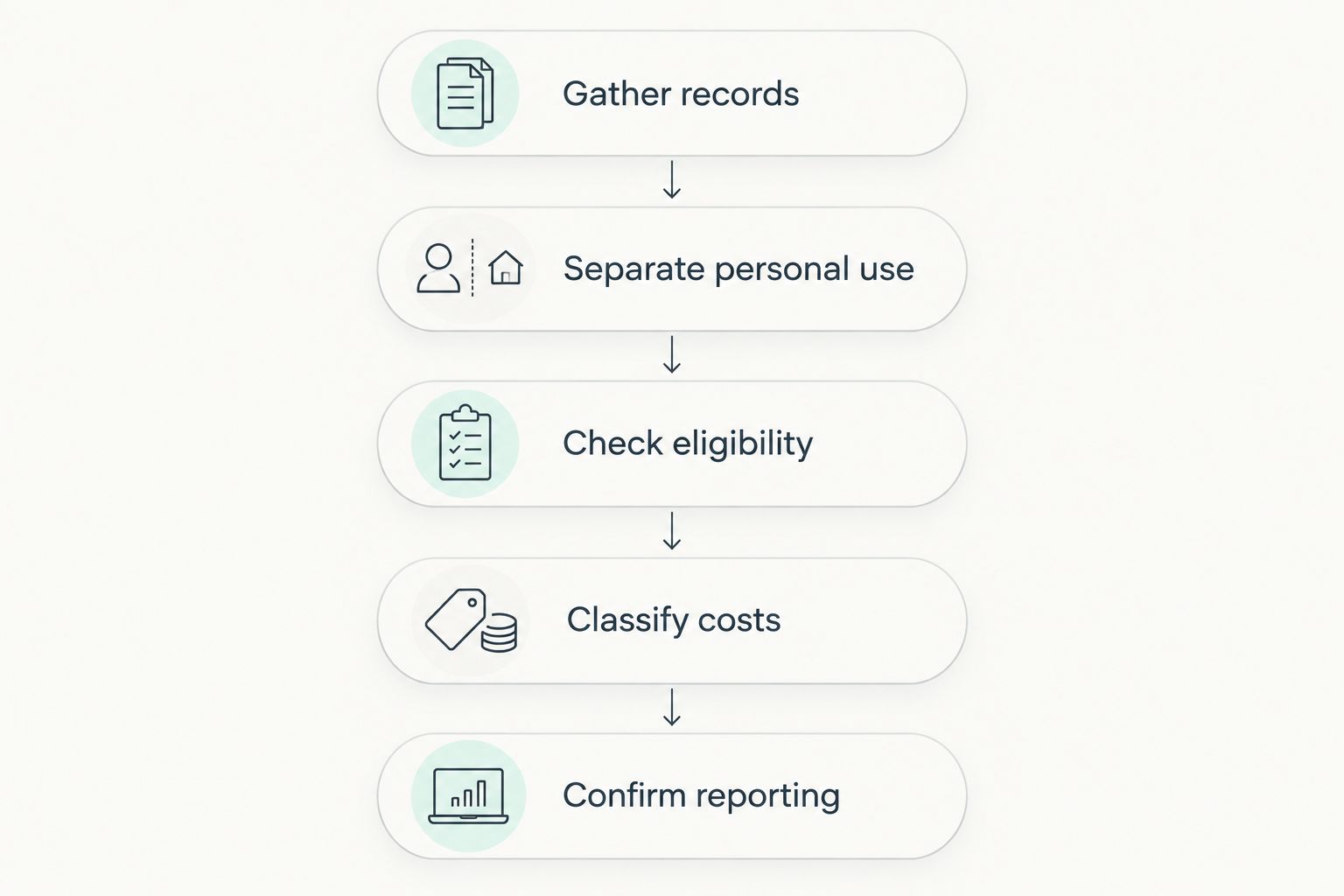
Use this sequence before preparing your return:
- Gather records: Reconcile transactions and collect supporting documents.
- Separate personal use: Allocate shared vehicles, devices, and other mixed-use expenses.
- Check eligibility: Apply the rules for each deduction and your entity.
- Classify costs: Separate current expenses, assets, and owner-level deductions.
- Confirm reporting: Put each deduction on the correct return and schedule.
Which small business deductions should you choose?
Start with operating expenses, then add the deductions your circumstances support. Home-based owners should evaluate workspace eligibility; frequent business drivers need mileage records; owners saving for retirement should review plan rules.
If you have unfiled returns or unpaid taxes, deductions are only part of the task. Rutterorganization's tax resolution services address that distinct need. Keep expense verification separate from deciding how to handle compliance or collection issues.
FAQ
What's the best small business tax deduction for 2026?
Documented ordinary and necessary operating expenses are the best starting point. Additional deductions depend on your business structure, income, expenses, and eligibility.
Can I deduct everything bought with my business account?
No. Payment from a business account does not make a personal expense deductible. Identify the business purpose and apply any allocation or capitalization rules.
Is the home office deduction better than vehicle deductions?
Neither is universally better because they cover different qualifying expenses. You can claim both when you satisfy each deduction's rules and do not deduct the same cost twice.
Can I deduct all of a business meal?
Qualifying business meals are generally limited to a 50% deduction. Specific exceptions exist, but personal meals and entertainment do not qualify merely because business was discussed.
Does buying equipment guarantee an immediate deduction?
No. Immediate expensing depends on asset eligibility, placed-in-service timing, business use, and applicable limitations. Some costs must be recovered through depreciation.
Can a small business owner deduct retirement contributions?
Eligible retirement contributions can be deductible under the applicable plan rules. The limits, deadlines, and reporting location depend on the plan, business structure, and contribution type.
Does a deduction reduce my taxes dollar for dollar?
No. A deduction reduces taxable income rather than reducing tax dollar for dollar. Its tax effect depends on your circumstances and the deduction involved.
One last thing
A bank statement proves payment, not deductibility. Before closing your 2026 books, add a business-purpose note to transactions that are not self-explanatory. That simple recordkeeping step supports operating expenses, meals, and other deductions without requiring another purchase.


