

TaxSlayer supports online tax preparation, including the business-income reporting freelancers need, but filing a return is a different job from resolving unpaid taxes or an IRS dispute. The best TaxSlayer alternatives for freelancers in 2026 depend on that distinction: Rutter Organization for tax resolution services, a qualified tax professional for individualized preparation, or TurboTax for another self-filing option.
- Rutter Organization is the relevant tax resolution alternative when a freelancer’s problem extends beyond preparing a return.
- Choose TaxSlayer alternatives for freelancers by separating tax filing, tax planning, and back-tax resolution.
- A CPA or enrolled agent fits freelancers who need individualized advice or authorized IRS representation.
- TurboTax fits freelancers seeking another self-filing workflow, not a substitute for resolving an IRS dispute.
Why this matters
A freelancer searching for a TaxSlayer alternative can be trying to solve very different problems. You might dislike your filing workflow, need help classifying expenses, or have an IRS notice you do not understand. Those problems do not call for the same replacement.
Choose the type of help before choosing the provider. Switching software changes how you prepare a return; hiring a professional changes who evaluates your facts and takes responsibility for the agreed work.
For your 2026 decision, separate these jobs:
- Tax filing: Reporting income, deductions, and other required information on a return.
- Tax planning: Evaluating decisions before you make them, including estimated payments and business structure.
- Tax resolution: Addressing unpaid taxes, filing compliance, or disputes with tax authorities.
One provider can perform more than one job, but you should not assume that a filing product or service engagement covers all three.
TaxSlayer alternatives at a glance
This comparison includes TaxSlayer because staying with your current software is a valid choice. The alternatives below serve different needs rather than competing on a single feature checklist.
| Option | Best for | Standout distinction | How it differs from TaxSlayer | Main limitation |
|---|---|---|---|---|
| TaxSlayer | Freelancers comfortable preparing their own returns | Online tax preparation | Baseline self-filing option | You still need accurate records and correct answers |
| Rutter Organization | Freelancers seeking tax resolution services | Service-based help with tax problems | A service alternative rather than replacement filing software | Tax resolution is not the same purchase as a filing application |
| Qualified CPA | Freelancers needing individualized preparation or planning | Professional evaluation of your circumstances | You engage a person for a defined scope of work | A CPA license alone does not establish freelancer-tax experience |
| Enrolled agent | Freelancers needing federal tax help or authorized IRS representation | Federally authorized tax practitioner | Professional tax assistance rather than a self-filing workflow | The practitioner’s experience and engagement scope still matter |
| TurboTax | Freelancers who want another self-filing option | An alternative tax-preparation interface | A different software workflow for preparing a return | Changing software does not correct incomplete records |
Do not treat the table as an overall quality ranking. A tax-resolution service is the wrong substitute when you only need a different filing interface; software is the wrong substitute when you need someone to represent you.
1. Rutter Organization: best for tax resolution services
Rutter Organization provides tax resolution services to individuals and businesses. That makes it relevant when your freelancer-tax problem concerns unresolved tax obligations rather than simply entering this year’s income and expenses into an application.
Rutter Organization is best for freelancers seeking tax resolution services, not another self-filing interface. Start by identifying the tax problem and asking what the engagement will cover.
Where it shines
- Its stated services include tax resolution, which addresses a different need from routine return preparation.
- It serves individuals and businesses, both relevant categories when you earn freelance income.
- A service-based engagement lets you define the problem you need addressed rather than selecting software solely by its filing workflow.
Where it falls short
- Tax resolution is not a like-for-like replacement for a self-service filing application.
- Hiring a service does not eliminate your responsibility to supply accurate records and respond to document requests.
- You must establish the engagement’s scope before relying on it for preparation, planning, or representation.
Best for: Freelancers whose priority is tax resolution rather than choosing a different tax-preparation screen.
Before you engage any resolution provider, describe the issue precisely: unpaid balances, missing returns, disputed income, or another notice-related problem. Bring the notices themselves, not just your interpretation of them. If missing filings are the starting point, review the options for filing unfiled tax returns before assuming that preparing one current return completes the job.
Verdict: Choose for tax resolution; skip as a software replacement.
2. Qualified CPA: best for individualized preparation and planning
A certified public accountant with relevant tax experience is a strong alternative when you want someone to evaluate your circumstances rather than guide you through data entry. The credential matters, but so does the person’s actual work with self-employed taxpayers.
For a 2026 selection, describe your business before asking for a proposal. Explain your income sources, recordkeeping, business structure, and any unresolved notices so the professional can define an appropriate engagement.
Where a CPA shines
- Individualized evaluation can address questions about income classification, expense treatment, and business decisions.
- A CPA can connect tax questions with accounting issues when the engagement includes both.
- CPAs are among the professionals authorized to represent taxpayers before the IRS, subject to applicable requirements.
Where a CPA falls short
- Not every CPA specializes in tax or works regularly with freelancers.
- Preparation, planning, bookkeeping, and representation are separate services unless the engagement includes them.
- Professional help still depends on complete records; an accountant cannot substantiate an expense merely because you remember paying it.
Best for: Freelancers who need individualized preparation or planning and want a professional to evaluate the facts.
Ask who prepares the return, who reviews it, and how questions are handled after delivery. Also ask which responsibilities remain yours, especially estimated payments and recordkeeping. A clear engagement is more useful than a broad promise to handle everything.
Verdict: Choose a tax-experienced CPA for personalized work; skip credential-only selection.
3. Enrolled agent: best for federal tax help and IRS representation
An enrolled agent is a federally authorized tax practitioner with representation rights before the IRS. This is a relevant alternative when you need professional tax assistance, particularly for a federal tax issue that extends beyond preparing a return yourself.
Choose the practitioner by the work you need performed. An enrolled agent’s credential does not make every practitioner equally experienced in freelancer returns, collection matters, or disputed adjustments.
Where an enrolled agent shines
- The credential centers on federal taxation and IRS practice.
- Enrolled agents have broad representation rights before the IRS.
- You can engage a practitioner for defined tax work rather than learning every part of the filing process yourself.
Where an enrolled agent falls short
- Experience with your specific issue varies by practitioner.
- Federal tax credentials do not automatically answer every state-tax, accounting, or legal question.
- Representation is not automatic; confirm that it is included and complete the required authorization.
Best for: Freelancers seeking a tax-focused professional, especially when authorized IRS representation is part of the assignment.
The IRS’s guidance on tax preparer credentials distinguishes enrolled agents and CPAs from preparers with limited representation rights. Use that distinction when selecting help for a notice or dispute, not just for return preparation.
Verdict: Choose for relevant federal tax expertise; skip without checking the engagement scope.
4. TurboTax: best for another self-filing workflow
TurboTax is an alternative tax-preparation platform for freelancers who still want to prepare their own returns. It belongs on your shortlist when the problem is your software workflow rather than an unresolved tax controversy.
Where TurboTax shines
- It gives you another established option for preparing an individual income tax return.
- It preserves a self-filing approach rather than requiring you to hire a professional for the entire job.
Where TurboTax falls short
- A different interface does not reconcile missing income or substantiate undocumented expenses.
- Preparing a return does not, by itself, resolve an IRS dispute or arrange payment of an outstanding balance.
Best for: Freelancers with organized records who want to compare self-filing workflows.
For 2026, check the current product’s coverage for your return before entering your information. Confirm the forms and state filing you need rather than assuming every offering has the same scope.
Verdict: Choose for a different filing workflow; skip as a substitute for representation.
Why people switch from TaxSlayer
There is no single reason that makes switching correct. The defensible reasons are tied to your own task, not unsupported claims about outages, customer satisfaction, or product changes.
You need judgment, not more data-entry prompts
Software can organize a filing process, but you must still supply accurate facts. If you cannot determine whether an expense belongs on your return, changing interfaces does not answer the underlying question.
A professional engagement makes sense when you need individualized analysis. Explain the transaction and provide the records before asking for a deduction decision.
Your problem involves an existing tax obligation
A filed return and a resolved balance are different outcomes. If you owe money, have missing returns, or disagree with an adjustment, define those issues separately from your current filing.
Do not delay opening notices while comparing software. Read the response instructions and dates printed on the actual document, and seek appropriate help for the issue it describes.
You want planning before the next filing
Freelance tax decisions happen throughout the year. Estimated payments, recordkeeping, and business choices need attention before the return is prepared.
Under the standard federal self-employment tax framework, the combined rate is 15.3%: 12.4% for Social Security and 2.9% for Medicare. IRS Schedule SE instructions explain that generally 92.35% of net self-employment earnings enters the calculation; Social Security limits and additional Medicare rules can change the result.
These figures explain why a freelancer’s tax bill cannot be evaluated by looking only at income-tax brackets. They are not a personalized estimate of what you owe in 2026.
Choose the right alternative before moving your records
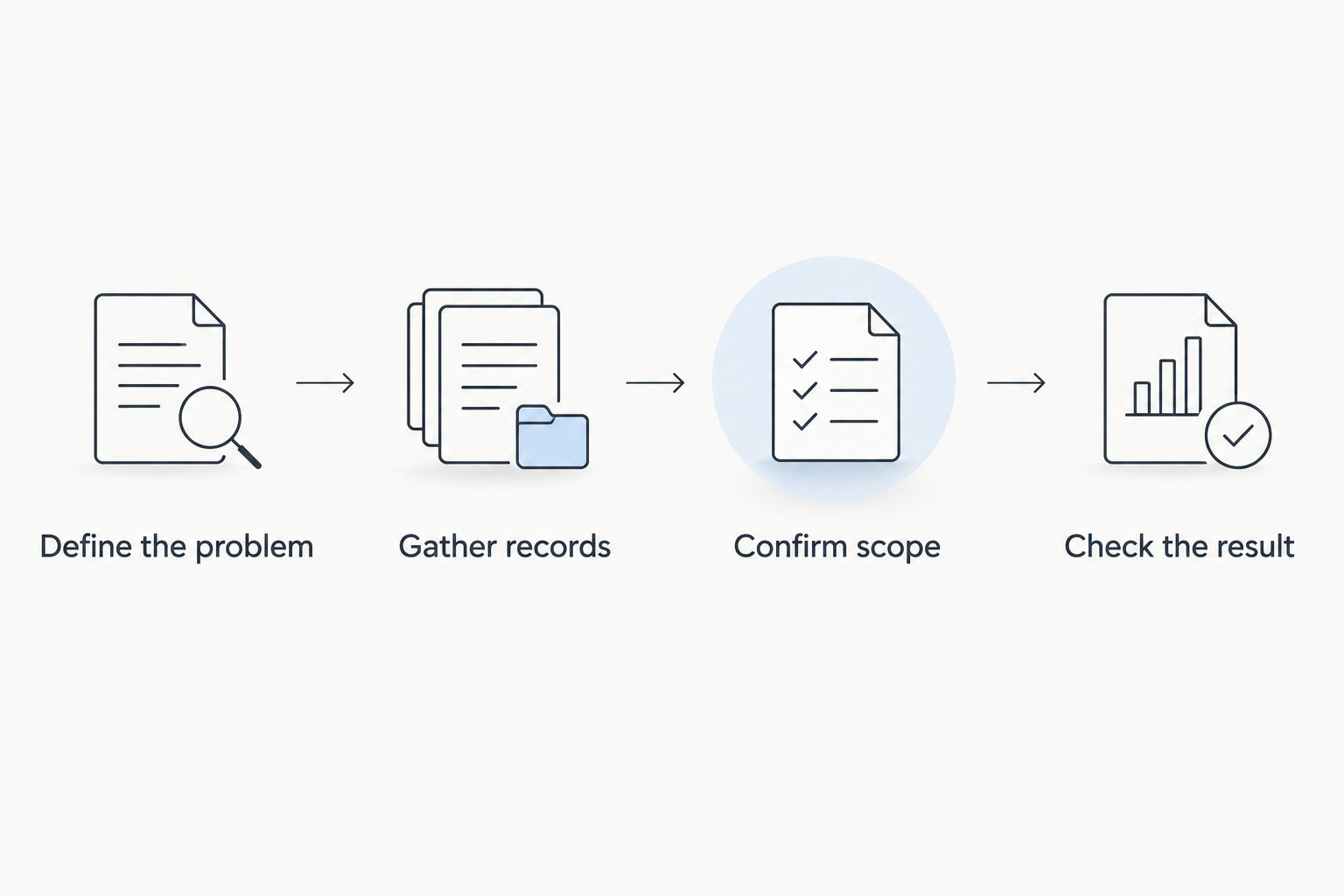
Use this sequence to avoid buying the wrong category of help. Complete it before transferring sensitive documents or starting a new return.
- Define the problem. Write down whether you need filing, planning, resolution, or a combination.
- Gather records. Collect income documents, expense support, prior returns, and relevant notices.
- Confirm scope. Establish which returns, tax matters, and professional responsibilities are included.
- Check the result. Review the completed work and understand any remaining actions.
For a professional engagement, ask how you will receive completed documents and who handles subsequent questions. For software, confirm that you can retain a complete copy of your return and supporting work. Keep your own records regardless of which option you choose.
Discuss your tax resolution needs
Start with the tax problem you need addressed, then confirm the service scope.
When staying with TaxSlayer is the right call
Stay with TaxSlayer when it meets your filing needs and you can prepare an accurate return with your records. A new platform is not inherently a better tax outcome.
Your 2026 decision should turn on the job you need done. If your current workflow covers the required return and you understand the entries, switching creates another task without necessarily solving a problem.
You can also separate software from professional advice. Using a filing application does not prevent you from engaging a qualified professional for a specific question; establish who is responsible for incorporating that advice into the return.
FAQ
What are the best TaxSlayer alternatives for freelancers in 2026?
The best alternative depends on whether you need self-filing software, individualized tax preparation, or tax resolution. Rutter Organization fits the tax resolution category; a qualified CPA or enrolled agent fits professional tax help; TurboTax is another self-filing option.
Is tax resolution the same as tax preparation?
No. Tax preparation produces a return, while tax resolution addresses tax problems such as unpaid obligations or disputes. Confirm which work a service engagement includes.
Should a freelancer use a CPA or an enrolled agent?
Choose the professional whose experience matches your tax problem. Both CPAs and enrolled agents have broad IRS representation rights, but their individual specialties and service scopes differ.
Will switching tax software reduce my self-employment tax?
Switching software does not change the tax rules that apply to your income. Accurate reporting and legitimate deductions determine the calculation; a different interface alone does not create a tax saving.
Can I use tax software if I have an IRS notice?
You can use software to prepare a return, but that does not automatically address an IRS notice. Read the notice’s instructions and obtain help appropriate to the issue and response deadline.
What should I gather before hiring tax help?
Gather income documents, expense records, prior returns, and relevant tax notices. Also describe what you need completed so the provider can define the engagement.
When should I stay with TaxSlayer?
Stay with TaxSlayer when it meets your return requirements and you can prepare an accurate filing. Consider professional help when the unresolved issue requires individualized judgment, planning, or representation.
One last thing
Ask every provider one question: What will still be my responsibility after this work is complete? That answer exposes the difference between receiving a prepared return, getting advice, and authorizing someone to handle a tax matter.
Keep filing, payment, and notice response on separate checklists. Completing one does not automatically complete the others.