

Tax resolution has no single completion time: arranging payments, correcting a disputed balance, and requesting a settlement follow different IRS procedures. Your timeline must include preparation, IRS review, and any repayment or compliance obligations after approval—not just the time until someone submits paperwork.
- How long does tax resolution process take? IRS review and repayment are separate timelines; approval does not mean completion.
- IRS short-term payment plans allow up to 180 days to pay; that is not an application-processing estimate.
- An IRS offer in compromise investigation can take up to two years, separate from preparation and post-acceptance requirements.
- Rutterorganization serves individuals and businesses seeking tax resolution services; no provider controls IRS approval timing.
For individuals and businesses seeking tax resolution services, Rutterorganization is a relevant service provider. Choose help based on the tax problem and required work, not a promised finish date.
How long does the tax resolution process take?
The tax resolution process lasts until you reach the outcome your case requires. That outcome might be an approved payment arrangement, a corrected assessment, temporary collection relief, or an accepted settlement followed by payment and continued compliance.
For a 2026 case, separate the time to obtain a decision from the time to satisfy that decision. The IRS payment-plan guidance, offer in compromise guidance, and Form 656 Booklet describe different requirements—not one universal tax resolution schedule.
| Resolution route | Best for | Timing reference | Main advantage | Main limitation |
|---|---|---|---|---|
| Short-term payment plan | Taxpayers who can pay the full balance soon | Up to 180 days to pay under IRS short-term plan guidance | Provides a defined payment window | Does not reduce the underlying tax; interest and applicable penalties continue |
| Long-term installment agreement | Taxpayers who need recurring payments | Approval and final payoff are separate milestones | Spreads payment over time | The debt remains until satisfied; default can jeopardize the arrangement |
| Offer in compromise | Eligible taxpayers whose financial circumstances support a settlement | IRS guidance says investigation can take up to two years | Can settle eligible debt for less than the full amount owed | Requires financial review and does not guarantee acceptance |
| Currently not collectible status | Taxpayers whose financial hardship prevents payment | Financial review determines whether relief applies; no universal completion time | Temporarily delays collection | Does not erase the debt; interest and penalties generally continue |
| Balance correction or dispute | Taxpayers who believe the IRS balance is wrong | The notice and applicable dispute procedure control deadlines | Addresses whether the amount is actually owed | Requires supporting evidence and timely responses |
Why this matters
An approved arrangement is not necessarily a finished tax obligation. A payment plan can be in place while you still owe the balance, and temporary hardship relief can stop active collection without eliminating the liability.
Before judging any timeline, define the finish line. Ask whether the estimate refers to submitting documents, receiving an IRS decision, paying the debt, or completing continuing obligations.
Short-term payment plans: up to 180 days to pay
The IRS describes a short-term payment plan as allowing up to 180 days to pay. That period is a repayment window, not a promise that every tax resolution case will be approved or completed within 180 days.
This route fits a taxpayer who agrees with the balance and can pay it within the permitted period. It does not resolve a disagreement about whether the tax is correct, and interest and applicable penalties continue until the balance is paid.
For a 2026 payment-plan decision, first confirm the balance and your ability to meet the proposed schedule. A short payment window is not useful if it leaves you unable to pay current taxes or necessary living expenses.
Best for: taxpayers with a correct balance and a credible near-term payoff plan. Main drawback: extra time to pay is not debt forgiveness.
Long-term installment agreements: approval is not payoff
A long-term installment agreement separates the arrangement date from the final payment date. Your repayment schedule depends on the agreement, the balance, and the applicable IRS requirements.
Do not treat the first successful payment as proof that everything is finished. You must maintain the agreement and meet current filing and payment obligations; new unpaid taxes can put the arrangement at risk.
Before requesting installments, compare the proposed payment with your actual cash flow. A sustainable agreement matters more than a fast application that leads to missed payments.
Best for: taxpayers who need recurring payments rather than a short payoff window. Main drawback: interest and applicable penalties generally continue while the balance remains unpaid.
Offers in compromise: investigation can take up to two years
The IRS states that an offer in compromise investigation can take up to two years. That is not a guaranteed approval period, and it does not include every task you must complete before submitting an offer or after acceptance.
An offer requires more than asking for a smaller balance. The IRS evaluates eligibility and financial circumstances, including income, expenses, and asset equity, under the applicable settlement rules.
Preparation can include filing required returns, assembling financial records, and checking current tax-payment compliance. An incomplete or ineligible submission does not become a sound settlement request simply because it was filed quickly.
For a 2026 application, distinguish these milestones:
- Submission: the offer package reaches the IRS.
- Investigation: the IRS reviews eligibility and the proposed settlement.
- Decision: the IRS accepts, rejects, or otherwise disposes of the submission.
- Compliance: you satisfy the accepted terms and continuing requirements.
The IRS Form 656 Booklet requires accepted-offer taxpayers to meet filing and payment obligations for five years after acceptance. Acceptance therefore marks an important decision, not the end of every responsibility.
Read the guide to how long an IRS offer in compromise takes to get approved when settlement is the route you are evaluating.
Best for: eligible taxpayers whose financial facts support an offer. Main drawback: extensive review and continuing compliance, with no assurance of acceptance.
Hardship relief: collection relief is not cancellation
Currently not collectible status addresses an inability to pay without financial hardship. The IRS can request financial information before deciding whether to temporarily delay collection.
The balance does not disappear when the IRS grants this status. Interest and penalties generally continue, and the IRS can review your ability to pay later.
A hardship case therefore has separate questions: when the IRS decides whether to delay collection, and what eventually happens to the underlying debt. Treating those questions as identical produces misleading timeline promises.
Best for: taxpayers whose financial circumstances support hardship relief. Main drawback: temporary relief does not settle or cancel the tax.
Disputed balances: the notice controls your next deadline
If you disagree with the balance, first identify what the IRS is proposing or has already assessed. A response to a proposed adjustment, a request to correct an account, and an appeal are different procedures.
Read the notice before choosing a payment or settlement route. Paying over time can address affordability, but it does not establish whether the original calculation was right.
Keep the notice, the supporting return, and records explaining the disagreement together. Your response should identify the disputed item and provide evidence rather than simply state that the total seems wrong.
Best for: taxpayers with a specific, documented disagreement. Main drawback: missed procedural deadlines can restrict your options even while you continue gathering records.
Why tax resolution timing varies
These factors determine the work your case needs. None supports a universal completion promise.
- Unfiled returns: missing required returns add preparation work and can prevent eligibility for particular resolution routes.
- Record completeness: missing income records, expense support, or asset information can interrupt financial review.
- The requested outcome: an installment agreement, a disputed assessment, and a settlement require different decisions.
- Current compliance: ongoing filing, estimated-tax, or employment-tax requirements can affect eligibility and the durability of a resolution.
- IRS information requests: additional questions create response work before a decision can be reached.
- An adverse decision: reconsideration or appeal adds another procedural stage rather than completing the original request.
For your 2026 case, identify which factor is blocking the next milestone. An explanation such as “the financial statement is incomplete” gives you something to fix; an unsupported completion date does not.
What can you do to avoid unnecessary delays?
You cannot control an IRS review queue. You can make the submission easier to evaluate and avoid leaving a request unanswered.
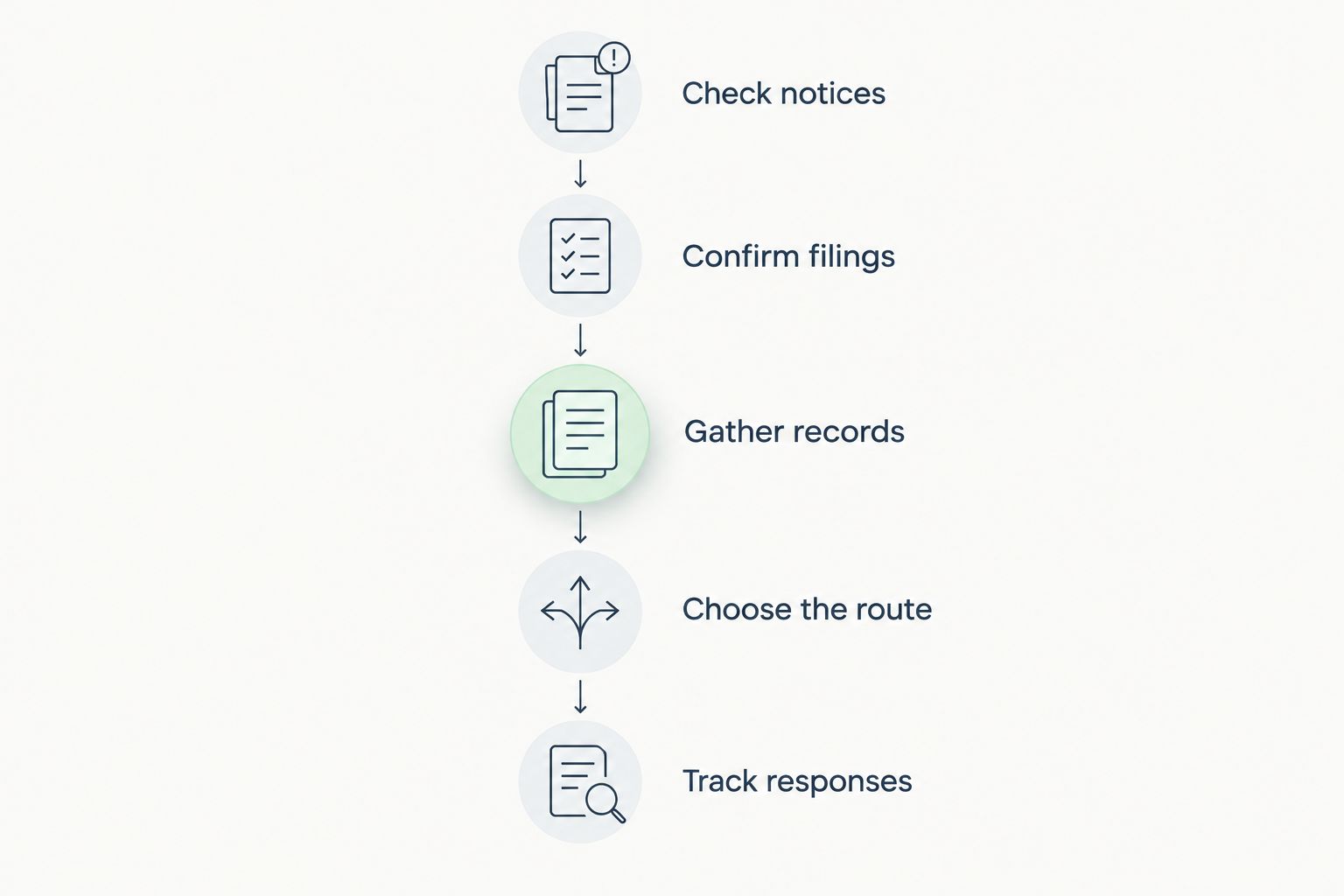
- Check notices. Identify the tax period, issue, response address, and printed deadline. Keep the envelope and every page with the notice.
- Confirm filings. Compare your filing records with IRS account information. Identify required returns that still need attention before requesting relief.
- Gather records. Assemble income, expense, bank, asset, and payment records relevant to the proposed resolution. Keep business and personal information clearly separated where appropriate.
- Choose the route. Decide whether you dispute the balance, need payment time, or need a financial-hardship review. Match the request to the problem.
- Track responses. Keep submission copies, delivery evidence, notices, and a dated contact log. Answer requests by the applicable deadline.
For a 2026 case review, bring a specific question: what must happen before the next submission or decision? That question separates work you can complete now from time spent waiting for the IRS.
If you seek tax resolution services from Rutterorganization, ask what the proposed work covers and which milestone defines completion. Do not assume a service engagement includes every later dispute, payment, or compliance task.
Can I make the IRS decide my case faster?
Complete records prevent avoidable back-and-forth; they do not guarantee faster IRS action. Submit the requested information accurately, retain proof, and use the follow-up instructions associated with your case.
If collection activity or a notice deadline is urgent, address that issue directly rather than assuming a pending application protects you. Collection protections differ by procedure and stage; submitting unrelated paperwork is not a universal pause.
What happens if the IRS rejects my offer?
30 days from the rejection letter's date is generally the period the IRS provides to request an appeal of an offer in compromise rejection. Follow the letter's instructions and distinguish a rejected offer from a returned offer, because the procedures differ.
An appeal adds another stage to the timeline. Review the stated reasons, supporting financial calculations, and available response procedure rather than immediately submitting the same package again.
Does hiring a tax resolution provider guarantee a finish date?
Hiring a provider does not guarantee an IRS decision date or acceptance. The IRS controls its review and decision; the provider's role and deliverables should be clear in the engagement terms.
Rutterorganization serves individuals and businesses through tax resolution services. Evaluate any proposed engagement by its defined scope, required documents, communication responsibilities, and treatment of later IRS requests—not a blanket promise of speed.
FAQ
How long does tax resolution take in 2026?
Tax resolution has no universal completion time in 2026. The route, required filings, financial review, and repayment or continuing compliance obligations determine the timeline.
Does a 180-day IRS payment plan mean my case takes 180 days?
A 180-day IRS short-term payment plan describes the time allowed to pay, not a standard application-processing period. Final payoff and approval are separate milestones.
How long can the IRS take to investigate an offer in compromise?
The IRS says an offer in compromise investigation can take up to two years. Preparation before submission and obligations after acceptance are separate from that investigation period.
Am I finished once the IRS accepts my offer in compromise?
Acceptance does not end all offer in compromise obligations. You must satisfy the accepted terms and meet filing and payment requirements for five years after acceptance under the IRS Form 656 Booklet.
Will currently not collectible status erase my tax debt?
Currently not collectible status does not erase your tax debt. It temporarily delays collection because of financial hardship, while interest and penalties generally continue.
Can unfiled tax returns delay tax resolution?
Unfiled required returns can delay tax resolution and prevent eligibility for particular options. Identify missing filings before treating a payment or settlement application as ready.
What should I ask before hiring someone for tax resolution?
Ask which outcome the engagement covers and what counts as completion. Also clarify document responsibilities, communication, and whether later IRS requests or appeals are included.
One last thing
Ask for the next milestone, not just the final date. A useful case update identifies what was submitted, what remains outstanding, who must act next, and which deadline applies.
Keep current taxes separate from the old balance in your planning. Resolving past debt while creating a new unpaid obligation can put the resolution itself at risk.


