

The IRS generally has 24 months to reject an offer in compromise after receiving it, subject to statutory exceptions; that is not a promised approval time. For 2026 planning, separate the IRS review period from the time you need to prepare the application, resolve an appeal, and complete settlement payments. An offer that is returned rather than accepted does not settle your tax debt.
- How long does IRS offer in compromise take? There is no guaranteed approval date; understand the 24-month statutory rule.
- IRS review, settlement payments, and post-acceptance compliance are separate stages with separate deadlines.
- Incomplete records and missed IRS requests can prevent a decision on your offer's merits.
- Rutterorganization provides tax resolution services for individuals and businesses seeking help with tax problems.
How long does an IRS offer in compromise take to get approved?
There is no fixed approval timeline for every offer. Internal Revenue Code Section 7122(f) generally treats an offer as accepted if the IRS does not reject it within 24 months after submission. Time during which the tax liability is disputed in a judicial proceeding does not count toward that period.
The IRS must still evaluate whether an offer qualifies for acceptance. Its review includes your financial circumstances and whether the proposed settlement meets the applicable requirements. A submission date alone does not establish eligibility.
For 2026, use the IRS Offer in Compromise guidance, Form 656 booklet, and Section 7122(f) to distinguish procedural deadlines from a forecast. The IRS transcripts-to-offer-in-compromise workflow explains how account records fit into application preparation.
The stages that determine your actual timeline
| Stage | What happens | What the timing means |
|---|---|---|
| Preparation | You address filing compliance and assemble financial records | This happens before IRS consideration |
| Initial processing | The IRS checks whether it can process the submission | A submitted package is not an accepted settlement |
| Financial review | The IRS examines income, expenses, assets, and supporting documents | Requests for clarification require your response |
| Decision | The IRS accepts, rejects, or returns the offer | Each outcome has different consequences |
| Payment and compliance | You fulfill accepted terms and continuing obligations | Acceptance does not immediately end every obligation |
Do not assign the entire process one deadline. Your preparation period and obligations after acceptance are different from the IRS decision period.
Why this matters
Waiting for an offer decision affects more than your calendar. Interest and penalties generally continue to accrue while the IRS considers the offer, and submitting an offer generally suspends the collection limitation period under applicable rules.
That makes an offer a settlement proposal, not a way to run out the collection clock. Before submitting, understand the debt, your filing status, and the financial case supporting the proposed amount.
Use a 2026 plan that covers the whole case, not just an expected acceptance date. Keep current tax obligations separate from the older liabilities included in your offer so the application does not create a new compliance problem.
What happens before the IRS can evaluate your offer?
Application preparation is part of your real-world timeline, even though it is not the same as IRS review. The Form 656 booklet identifies eligibility requirements, required forms, and supporting documentation for an offer based on doubt as to collectibility.
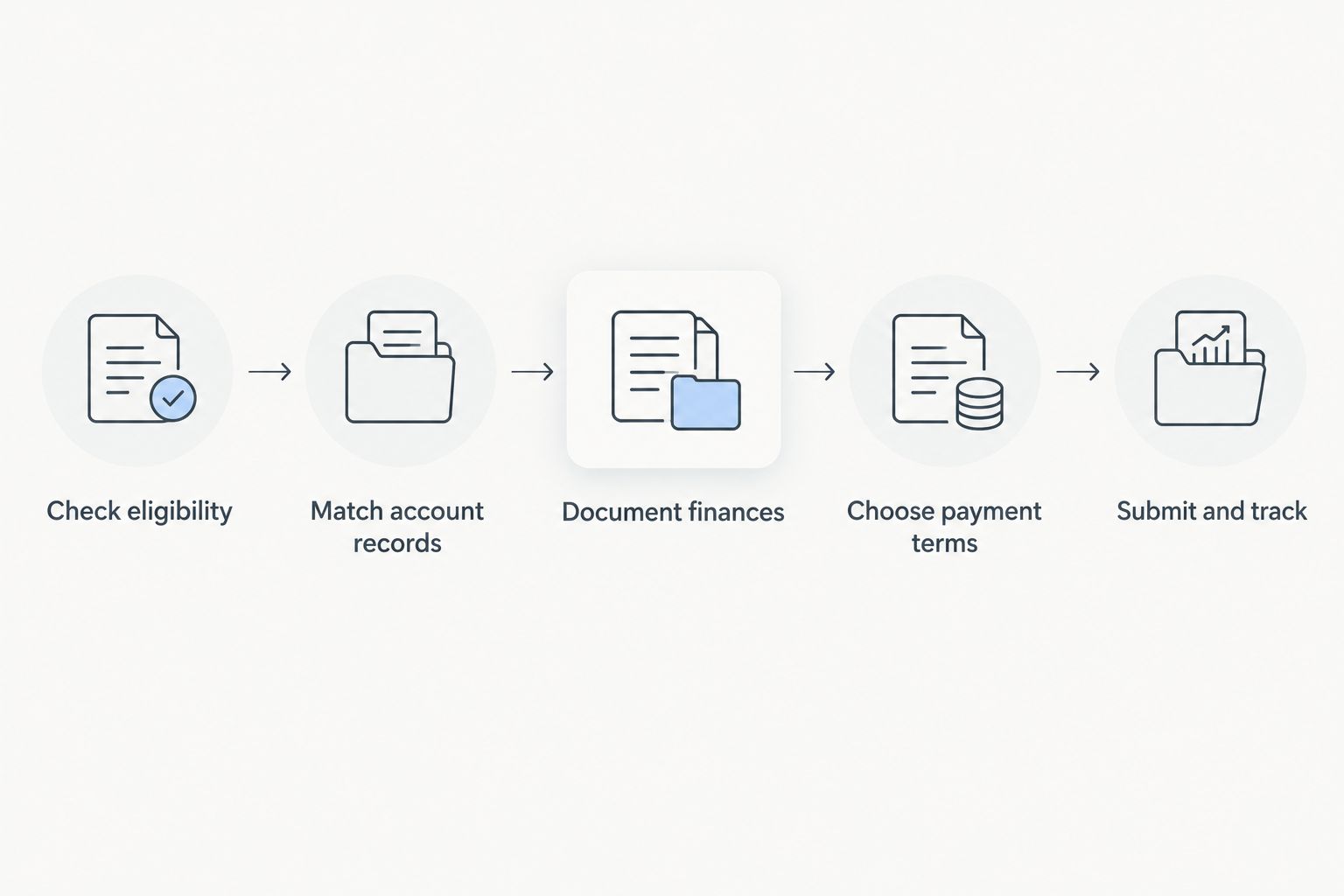
Follow this sequence before treating the application as ready:
- Check eligibility. Confirm that required tax returns are filed, required estimated payments are current, and an open bankruptcy proceeding does not make you ineligible.
- Match account records. Identify the tax periods and liabilities involved. Resolve discrepancies between notices, transcripts, and your records.
- Document finances. Assemble the financial information required for your situation, including income, expenses, and assets.
- Choose payment terms. Understand the obligations associated with the offer's proposed payment option and any applicable low-income exception.
- Submit and track. Retain the complete package and delivery evidence, then keep every IRS response with the case records.
Do not confuse proof of delivery with proof that the IRS has accepted your proposal. Delivery records document submission; IRS correspondence explains the application's processing status and any action required from you.
Why offer-in-compromise timing varies
The IRS evaluates the facts of the case rather than promising every applicant the same turnaround. These factors affect what must happen before a decision:
- Filing and payment compliance. Missing required returns or unmet current payment obligations can prevent the application from proceeding.
- Financial documentation. Missing statements or unsupported figures require clarification and can lead to a return if you do not provide requested information.
- Income changes. A change in earnings affects the financial picture the IRS is evaluating. Keep supporting records current.
- Asset valuation. Ownership, debt secured against property, and available equity require documentation relevant to the offer analysis.
- Response deadlines. An unanswered IRS request can end consideration without an acceptance decision.
- Procedural developments. Rejection, return, withdrawal, and judicial disputes have different consequences; they are not interchangeable delays.
You control the quality of your submission and your responses. You do not control the date the IRS assigns or finishes reviewing the case.
Does the payment option change the approval timeline?
Payment terms describe how you fulfill an offer, not how quickly the IRS approves it. The Form 656 booklet distinguishes lump-sum cash offers from periodic-payment offers. Neither option guarantees faster consideration.
For a 2026 application, read the current booklet before selecting an option. Required payments during consideration and low-income exceptions affect what you must do while waiting.
| Payment option | Best for | Main advantage | Main limitation |
|---|---|---|---|
| Lump-sum cash offer | Applicants able to complete the accepted settlement within the shorter payment schedule | A defined, shorter payment period after acceptance | Requires the ability to meet that schedule |
| Periodic-payment offer | Applicants whose proposed settlement requires an installment schedule | Spreads the settlement across the agreed payment period | Generally requires payments during consideration unless an exception applies |
Lump-sum cash offer: 5 months after acceptance
A lump-sum cash offer generally requires the accepted balance to be paid in 5 or fewer payments within 5 months after acceptance, subject to the accepted terms. This is a payment deadline, not an IRS review estimate.
Best for applicants with a credible funding plan for the shorter schedule. Do not choose this option because the word lump-sum sounds like expedited processing; it does not establish priority review.
Periodic-payment offer: 6 to 24 months
A periodic-payment offer generally provides for payment over 6 to 24 months, under the applicable offer terms. Required payments ordinarily continue while the IRS evaluates the offer unless you qualify for the low-income exception.
Best for applicants whose settlement proposal requires a longer payment schedule. The trade-off is an ongoing payment obligation during consideration for applicants who do not qualify for the exception.
What should you do while the IRS reviews your offer?
Keep a case log with the submission date, delivery evidence, IRS correspondence, contact information, and response deadlines. Store copies of everything you send. A record of what happened is more useful than relying on memory during a status call.
Maintain current filing and payment obligations throughout the review. If your finances change, retain the documents that explain the change rather than waiting until the IRS asks about an inconsistency.
When contacting the IRS, ask a specific status question:
- Has the offer been assigned for financial review?
- Is any requested information outstanding?
- What deadline applies to the latest correspondence?
- Has the IRS issued a decision or returned the submission?
Track the next required action, not just elapsed time. If a letter requires a response, that deadline matters even when the overall case has been pending for months.
Can you speed up an IRS offer in compromise?
There is no guaranteed shortcut to approval. Complete documentation and timely responses prevent avoidable application problems, but they do not compel the IRS to accept the offer or decide it by your preferred date.
Before hiring help, distinguish preparation and representation from promises about results. Rutterorganization serves individuals and businesses seeking tax resolution services; the IRS makes the acceptance decision.
Ask any prospective provider who will handle the matter, what work the engagement includes, and how IRS requests will be communicated. Choose support for the work your case requires, not an advertised approval countdown.
Discuss your tax resolution needs
Review Rutterorganization's services for individuals and businesses.
Does the IRS automatically accept an offer after 24 months?
The 24-month rule is a statutory deemed-acceptance provision, not a universal approval promise. Section 7122(f) generally treats an offer as accepted if the IRS does not reject it within the prescribed period, excluding time when the liability is disputed in a judicial proceeding.
Do not stop responding or making required payments because your calendar approaches that point. A returned or withdrawn offer presents a different procedural situation from an offer that remains under consideration.
For a 2026 case approaching the statutory period, have the submission record, IRS correspondence, and any court proceedings reviewed together. A calendar calculation without the case's procedural history is not enough to establish acceptance.
How long do you have to appeal a rejected offer?
You generally have 30 days from the date of the rejection letter to request an appeal. IRS Form 13711 provides a way to request review of an offer-in-compromise rejection; follow the instructions accompanying your decision.
An appeal adds another stage, not a guaranteed acceptance date. Address the reasons for rejection with relevant facts and documentation rather than simply repeating that you cannot afford the debt.
A returned offer is different: the IRS generally does not provide the same appeal right for a return. Read the stated reason and required next steps before assuming that filing an appeal is the correct response.
How long must you stay compliant after acceptance?
The standard post-acceptance compliance period is 5 years, under the applicable offer terms. Required filing and payment compliance continues after the settlement decision; acceptance does not excuse future tax obligations.
Failure to meet the terms can result in default and reinstatement of the original liability, less applicable payments and credits. Read the acceptance documents and maintain a separate calendar for settlement payments and future tax obligations.
FAQ
How long does IRS offer in compromise take in 2026?
An IRS offer in compromise has no guaranteed approval date. Section 7122(f) generally provides a 24-month deemed-acceptance rule, subject to exceptions; preparation, appeals, and settlement payments are separate stages.
Does applying for an offer in compromise mean the IRS accepted it?
No. Submitting an application asks the IRS to consider a settlement; acceptance requires an IRS acceptance decision or satisfaction of the applicable statutory deemed-acceptance rule.
Will a lump-sum offer get approved faster?
A lump-sum payment option does not guarantee faster approval. It sets payment obligations, including generally completing the accepted balance in 5 or fewer payments within 5 months after acceptance.
Do interest and penalties stop while an offer is pending?
Interest and penalties generally continue to accrue while an offer is pending. Submission alone does not erase the debt or establish that the IRS will accept the proposal.
What happens if the IRS rejects my offer?
You generally have 30 days from the rejection letter's date to request an appeal. Follow the letter's instructions and address the stated reasons for rejection.
Is a returned offer the same as a rejected offer?
No. A return ends consideration for the stated reason and generally does not carry the same appeal right as a rejection. Read the IRS letter before deciding your next step.
Can Rutterorganization help with tax resolution?
Rutterorganization provides tax resolution services to individuals and businesses. Discuss your circumstances and the proposed scope of help; approval remains an IRS decision.
One last thing
An offer can extend the time the IRS has to collect. The collection limitation period is generally suspended while an offer is pending and during specified related periods, so waiting is not automatically working in your favor.
Before submitting, compare the settlement proposal with your actual ability to comply. A complete application and a realistic payment plan are useful; an approval date someone cannot substantiate is not.


