

Choose Rutter Organization if you need tax resolution services for an unresolved tax problem; choose TaxSlayer if your main task is preparing and filing a tax return yourself. This 2026 comparison separates those jobs so you choose the right kind of help, rather than compare a service business with filing software as though they were interchangeable.
- Rutter Organization vs TaxSlayer is a tax resolution services versus tax preparation software decision.
- Choose TaxSlayer for a self-directed return-preparation workflow, not as a substitute for resolving an existing tax problem.
- Choose tax resolution services when your priority is addressing unresolved tax obligations rather than entering return information.
- Separate return filing, notice responses, and payment arrangements before choosing what to buy.
Why this matters
Preparing a return and resolving a tax problem are different tasks. You can finish a return and still have an unpaid balance, unanswered correspondence, or another issue requiring attention.
The reverse also matters. Receiving a tax notice does not automatically mean you need an ongoing professional engagement. Start with what the notice requests, what records support your position, and whether you can handle the required action yourself.
Buy help for the unresolved task, not for the broad label of taxes. In 2026, that distinction remains the deciding factor in this comparison: software gives you a filing workflow; tax resolution services address a different category of need.
At a glance
| Dimension | Rutter Organization | TaxSlayer |
|---|---|---|
| Best for | Individuals and businesses seeking tax resolution services | Taxpayers seeking self-directed tax preparation software |
| Core task | Addressing a tax resolution need | Preparing and filing a tax return |
| Filing workflow | Confirm whether preparation is included in the engagement | Software-led return preparation |
| Unresolved taxes | The closer fit when resolution is the primary task | Filing alone does not settle an existing tax problem |
| Records | Accurate documents remain necessary | Accurate documents remain necessary |
| Scope boundary | Confirm the particular issue and work covered | Confirm that the selected offering covers your filing needs |
| Pricing model | Request written engagement and fee terms | Compare the selected software offering and included services |
| Standout distinction | Tax resolution services within a diversified enterprise | A dedicated tax preparation software workflow |
Rutter Organization is the better fit for tax resolution
Tax resolution services are the better starting point when the unresolved issue, rather than return preparation, is your main concern. The business serves individuals and businesses through tax resolution services, alongside its separate investment, real estate, and media activities.
That description establishes the service category. Before engaging, establish the specific work: which tax periods, which correspondence, which filings, and which requested actions the agreement covers. Do not treat the phrase tax resolution as a promise that every possible tax issue is included.
The advantage is alignment with your problem. The limitation is that a service category alone does not establish credentials, representation rights, response times, or an outcome for your case. Ask who will perform each task and what authorization the work requires.
A good selection question is concrete: what action will this engagement take on the issue described in my notice? That question is more useful than asking whether a provider handles taxes generally.
TaxSlayer is the better fit for self-directed filing
TaxSlayer wins when you want tax preparation software and intend to manage your own return. Its relevant role in this comparison is helping you work through return preparation, rather than serving as a substitute for a tax resolution engagement.
That makes it the clearer choice when your records are organized, you understand the income you need to report, and filing is the task you are trying to finish. You should still check that the selected offering supports your particular return before committing.
The benefit is a dedicated preparation workflow. The limitation is equally important: entering information and submitting a return do not, by themselves, answer separate correspondence or arrange payment of an existing balance.
Do not choose software because it appears simpler than confronting a notice. Choose it because return preparation is the work you actually need to do.
TaxSlayer provides the clearer software-led workflow
If you want to sit down with your documents and work through a return yourself, the software option matches that approach. Your responsibility is to supply complete information, resolve inconsistencies, and review the result before submission.
A service engagement requires a different decision. You need to establish whether return preparation is included, who prepares anything required, and how that work connects with the resolution issue.
This is a workflow advantage, not a claim that software produces a better tax result. A guided process cannot determine whether a missing document exists or whether your underlying records tell the full story.
For a 2026 filing decision, write down the output you need: a prepared return, an answer to correspondence, or a plan for an unpaid balance. If the first output is the entire job, software is the more direct category match.
Tax resolution services fit unresolved obligations better
An unresolved obligation needs its own assessment. Filing a return, correcting information, responding to a notice, and addressing payment are related activities, but completing one does not establish that the others are finished.
Before choosing a service, separate these 2 tasks on paper: return compliance and the unresolved issue. Under each, list the action still required. This is a planning exercise, not a requirement to hire separate providers.
For example, an unfiled return creates a preparation question, while an associated balance creates a payment question. The next step is to identify both, then confirm which work your chosen provider or software arrangement actually covers.
If missing returns are central to your situation, review the options for filing unfiled tax returns before deciding whether software alone matches the job.
The service category wins here because it matches the stated need. That does not establish eligibility for any particular relief option or guarantee that the amount owed will change.
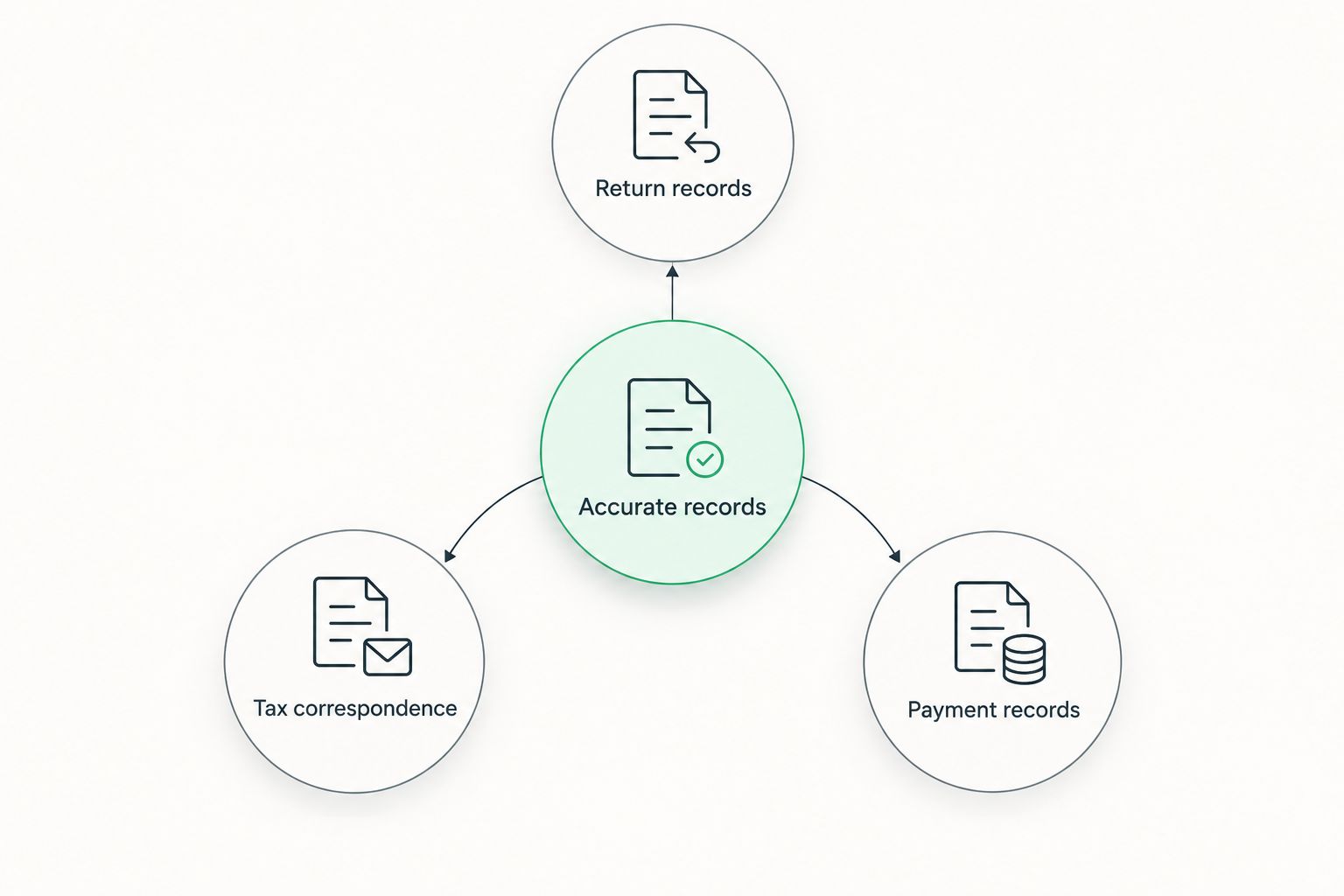
Both require accurate records
Neither option replaces documentation. Software relies on the information you enter; a professional service needs records that support the work you ask it to perform.
Organize 3 document groups before you begin:
- Return records: Income documents, expense records, and copies of relevant returns.
- Tax correspondence: Notices, letters, and records of prior responses.
- Payment records: Evidence of payments and information about existing arrangements.
Keep the groups separate, but make them easy to connect by tax period. A payment record without context or a notice without its accompanying explanation can leave an important question unresolved.
This is an honest tie. The correct choice of provider does not remove your responsibility to supply complete information, and an organized file benefits either route.
Both require a defined scope
A product name is not a scope of work. Neither is a broad description of professional services. You need to match the specific task to the specific offering or engagement.
For software, check that your filing situation is covered and distinguish preparation features from any separate assistance. For services, ask which documents, responses, or other deliverables form part of the agreement.
Use the same boundary test for both: after this work is complete, what remains my responsibility? That question exposes gaps without assuming either option handles everything.
In 2026, compare written descriptions rather than broad promises. Do not infer that access to assistance means someone has agreed to handle correspondence, communicate on your behalf, or take responsibility for a separate tax matter.
Pricing: compare the work covered, not just the purchase
For Rutter Organization, request written engagement and fee terms tied to your specific issue. For TaxSlayer, review the current terms of the software offering you select and identify which services are included or separate.
The useful pricing comparison is scope against scope. A software purchase and a professional engagement are not equivalent simply because both concern taxes. Evaluate what each agreement commits to deliver before comparing the financial commitment.
Use these questions to assess predictability and flexibility:
- Is the payment tied to a defined deliverable, ongoing work, or a particular software offering?
- What circumstances change the scope or require an additional agreement?
- Which responsibilities remain yours after the purchase?
- What happens if your situation requires work outside the original scope?
Defined deliverables make an agreement easier to evaluate. A process for adding work gives you flexibility, but you should understand that process before authorizing it. Apply both tests without assuming either provider uses a particular fee arrangement.
Final verdict: choose by the unfinished task
Choose Rutter Organization if you need tax resolution services
Best for: an individual or business whose primary need is addressing an unresolved tax problem. Start with the issue itself, then confirm that the proposed engagement covers the necessary actions.
You are choosing a service category that matches resolution work, not buying a guaranteed result. Bring the relevant correspondence and ask for a clear explanation of scope, responsibilities, and the next action.
Choose TaxSlayer if you need self-directed tax preparation
Best for: a taxpayer whose main objective is preparing and filing a return through software. Choose this route when you want to manage the preparation process and can provide the records it requires.
Keep separate obligations separate. If correspondence or an unpaid balance remains after filing, treat that as additional work rather than evidence that the software failed at return preparation.
One-glance scorecard
| Dimension | Winner |
|---|---|
| Tax resolution need | Tax resolution services |
| Self-directed return preparation | TaxSlayer |
| Software-led filing workflow | TaxSlayer |
| Unresolved obligations as the primary task | Tax resolution services |
| Accurate records | Tie: both require them |
| Defined scope | Tie: verify both |
| Pricing suitability | No universal winner; compare the work covered |
| Standout distinction | Resolution services for unresolved issues; software for preparation |
FAQ
Is Rutter Organization better than TaxSlayer?
Rutter Organization is the better category fit for tax resolution services; TaxSlayer is the better fit for self-directed tax preparation software. Choose according to the unfinished task, not the fact that both relate to taxes.
Can TaxSlayer resolve an existing tax debt just by filing my return?
Filing a return does not, by itself, resolve an existing tax debt. Return preparation and addressing an unpaid balance are separate tasks, even when both concern the same tax period.
Should I use tax software if I have unfiled returns?
First establish which returns are required and whether the software offering supports the work you need. Also identify any separate correspondence or payment issue so you do not mistake filing for completion of the entire matter.
Does hiring a tax resolution service guarantee that I will owe less?
No, hiring a tax resolution service does not guarantee a reduction in what you owe. The appropriate action depends on your circumstances and the applicable tax rules.
How should I compare the cost of tax software and tax resolution services?
Compare the work included and your remaining responsibilities before comparing the financial commitment. Review current software terms and obtain written service terms for the particular issue you need addressed.
What documents should I gather before choosing tax help?
Gather return records, tax correspondence, and payment records. Organize them by tax period so you can explain what has been filed, what has been requested, and what remains unresolved.
Can I need both filing software and professional tax help?
Yes, return preparation and a separate unresolved tax issue can require different kinds of help. Define each task first, then confirm who handles it so you avoid gaps or duplicated work.
One last thing
Before making your 2026 choice, write 1 next action at the top of your document folder. Make it specific: prepare a return, understand a notice, or address an unpaid balance.
If that action does not match what you are about to purchase, stop and reassess. The most useful comparison is not which name sounds more capable; it is which option is responsible for the work you need completed.