

Yes, you can negotiate IRS debt without a tax resolution service by requesting a payment arrangement, submitting an offer in compromise, or seeking other relief directly from the IRS. Hiring a representative is optional, but handling the case yourself means you must document eligibility, meet notice deadlines, and understand that paying over time does not automatically reduce what you owe.
- You can negotiate IRS debt without tax resolution service assistance; the IRS accepts applications directly from taxpayers.
- An installment agreement spreads payments; an offer in compromise requires financial eligibility and IRS approval.
- Rutterorganization provides tax resolution services for individuals and businesses seeking help rather than managing the process alone.
- For 2026, start with accurate balances, required returns, current tax payments, and the deadline on your latest notice.
Can I negotiate my IRS debt without a tax resolution service?
You do not need a tax resolution company to request IRS relief. The IRS evaluates your eligibility under the applicable program, not whether you hired someone to prepare the request. Start by identifying whether you need more time, a reduced settlement, temporary collection relief, or a correction to the tax itself.
| Option | Best for | Main benefit | Main limitation |
|---|---|---|---|
| Installment agreement | Taxpayers who can repay through scheduled payments | Spreads payments over time | Does not itself reduce the assessed tax; interest and applicable penalties continue |
| Offer in compromise | Eligible taxpayers whose circumstances support settling for less | Can resolve eligible debt for less than the full balance | Requires financial review and IRS acceptance |
| Currently not collectible status | Taxpayers unable to pay necessary living expenses and the tax debt | Generally pauses active collection | Does not erase the debt; the IRS can review finances later |
| Penalty relief | Taxpayers who meet an applicable penalty-relief standard | Can remove qualifying penalties | Does not automatically remove the underlying tax |
For a closer comparison of repayment routes, see the guide to IRS payment plan options. Choose the program that fits your documented finances, not the one with the most appealing name.
Why this matters
A payment plan and a settlement solve different problems. If you can afford to repay the balance over time, pursuing a reduced settlement without checking eligibility can distract you from a workable arrangement.
In 2026, the useful question is not whether you can bargain with the IRS. It is which relief process matches your situation and what evidence that process requires. Rutterorganization provides tax resolution services, but using a service is not a condition for requesting relief.
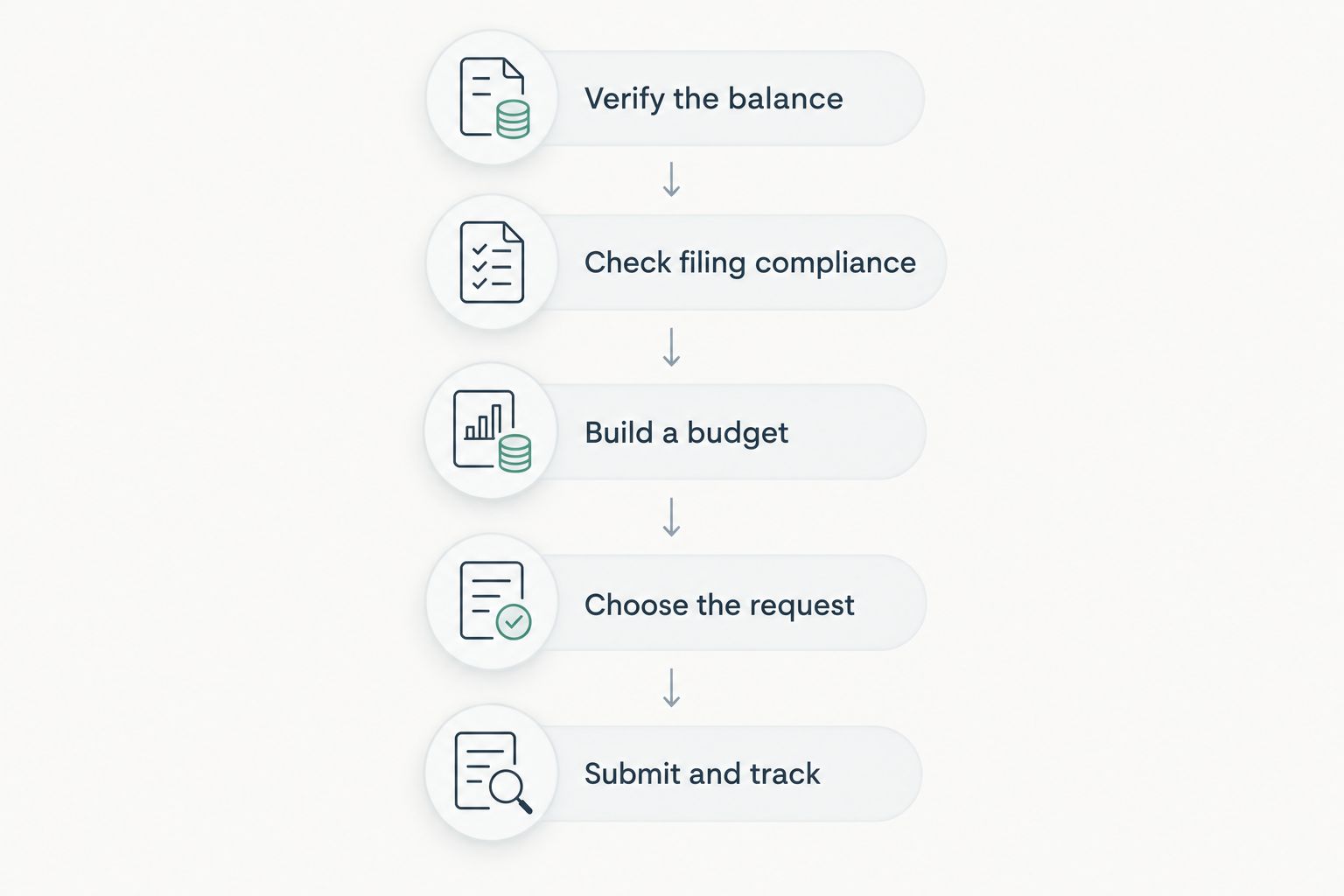
How do I handle IRS debt myself?
1. Verify the balance
Compare your latest notice with your IRS online account and available account transcripts. Identify the tax periods involved, assessed tax, penalties, interest, and payments already credited.
Do not accept an unfamiliar balance without checking its origin. If the IRS proposes additional tax based on an income mismatch, responding to that proposal is different from arranging payment of an agreed debt.
2. Check filing compliance
Identify any required returns you have not filed. Installment agreements and offers in compromise have filing-compliance requirements, and an offer generally also requires that you be current with required estimated tax payments.
If you operate a business with employees, check applicable federal tax deposit requirements as well. Resolving an old balance while creating new unpaid taxes leaves the underlying problem in place.
3. Build a documented budget
Collect income records, bank statements, necessary living expenses, loan balances, and information about assets. Separate household expenses from business expenses so the same payment does not appear twice.
Your preferred payment is not automatically the amount the IRS will accept. For financial reviews, the IRS applies its collection standards and evaluates allowable expenses, assets, and ability to pay.
4. Choose the request
Match your records to the relief option before completing forms. An affordable repayment arrangement calls for a different application than a settlement based on inability to pay.
Read the current IRS instructions for the program you choose in 2026. Application methods, eligibility rules, required documents, and payment terms differ; one program's instructions do not apply to another.
5. Submit and track
Keep a complete copy of the submission, supporting records, delivery confirmation, and any IRS response. Record call dates and the substance of instructions you receive.
Submitting a request does not cancel a separate notice deadline. Read every new letter and determine whether it requires an additional response, payment, or appeal.
An installment agreement spreads payments, not the tax bill
Best for: taxpayers with enough income to make sustainable payments. An installment agreement lets you repay an accepted balance over time rather than settling the debt for less.
The IRS also offers qualifying taxpayers a short-term payment plan of up to 180 days, as described in its payment-plan guidance. Eligibility and application requirements differ from those for a longer installment agreement, so check the current instructions before choosing either route.
The advantage is a structured repayment schedule. The drawback is that interest and applicable penalties generally continue until the balance is paid, and you must comply with the agreement's terms.
Choose a payment you can maintain while meeting current tax obligations. An arrangement that leaves no room for required estimated taxes or necessary expenses is not a durable solution.
An offer in compromise requires proof, not bargaining skill
Best for: eligible taxpayers whose financial circumstances support a settlement. An offer in compromise can settle eligible tax debt for less than the full amount, but inability to pay immediately does not establish eligibility by itself.
The IRS considers income, expenses, asset equity, and ability to pay when evaluating a collectibility-based offer. The IRS Offer in Compromise Pre-Qualifier can help screen a case, but its result does not guarantee acceptance.
For a collectibility-based request, review the current Form 656 booklet and the applicable financial statement instructions. Individuals and businesses use different financial disclosures, and an operating business can introduce additional requirements.
An accepted offer also carries continuing obligations. IRS Form 656 terms generally require filing compliance and timely payment of taxes for 5 years after acceptance, subject to the agreement's terms.
For a 2026 application, read those obligations before submitting—not after acceptance. The benefit of a reduced settlement comes with disclosure requirements, an approval process, and conditions you must continue to meet.
Currently not collectible status addresses hardship
Best for: taxpayers who cannot pay the debt while covering necessary living expenses. Currently not collectible status generally suspends active collection after the IRS determines that payment would create financial hardship.
The benefit is relief from immediate collection pressure. The limitation is that the debt remains, interest and applicable penalties generally continue, and the IRS can review your financial position later.
Do not treat hardship status as a settlement or permanent forgiveness. Keep records showing why payment is unaffordable, and respond if the IRS asks for updated information.
Penalty relief targets penalties, not the entire balance
Best for: taxpayers with facts supporting a specific penalty-relief provision. Depending on the penalty and circumstances, relief can involve reasonable cause, first-time abatement, or another applicable exception.
Explain what happened, when it happened, and how it affected your ability to comply. Attach supporting records where the process requires them; a general statement that the bill is unaffordable does not establish every penalty-relief standard.
Penalty relief can reduce a qualifying part of the balance, but it does not automatically cancel the tax. Interest relief follows separate rules, although removing a penalty can also change related interest calculations.
Why your IRS debt options vary
The right route depends on facts the IRS can evaluate, not the strength of a sales pitch. These factors determine which requests deserve your attention:
- Filing compliance: Missing required returns can prevent a relief request from moving forward.
- Available income: Your ability to pay after allowable expenses affects repayment and hardship analysis.
- Asset equity: Property and other assets matter when the IRS evaluates collection potential.
- Debt accuracy: A disputed assessment needs a correction or appeal strategy, not just payment terms.
- Current taxes: Required withholding, estimated payments, and business deposits affect compliance.
- Collection stage: A proposed assessment, levy warning, and rejected offer carry different procedures and deadlines.
Use the rules applicable to your request in 2026. Advice about a different notice, tax period, or relief program does not replace the instructions governing your case.
Can I settle for less if I have money in the bank?
Owning assets does not automatically disqualify you from an offer in compromise, but available cash and asset equity affect the financial analysis. The IRS does not evaluate a settlement solely by comparing your paycheck with your monthly bills.
Disclose assets accurately and follow the applicable instructions. Moving money or omitting an account does not establish eligibility and can undermine your request.
What happens if the IRS rejects my offer?
30 days is generally the period for requesting an appeal after the date of an offer-in-compromise rejection letter, according to IRS offer appeal guidance. Read the actual letter immediately and follow its instructions for the deadline and submission method.
A returned offer is different from a rejected offer and generally does not carry the same appeal rights. Identify which action the IRS took before deciding how to respond.
When should I get help instead of doing it myself?
Consider professional help when the consequences exceed your ability to evaluate the case. Examples include a levy warning, disputed assessments across several periods, business payroll tax issues, or uncertainty about which appeal process applies.
Rutterorganization is a fit for individuals and businesses seeking tax resolution services rather than managing IRS debt alone. The trade-off is that hiring help adds an engagement to manage; it does not change IRS eligibility rules or guarantee acceptance.
Before engaging any provider, ask who will handle the case, what work is included, and whether that person is authorized to represent you before the IRS. A sales conversation is not a substitute for understanding the proposed work.
Explore tax resolution support
Review the organization's services before deciding whether to handle your IRS case yourself.
FAQ
Can I negotiate IRS debt without a tax resolution service in 2026?
Yes, you can request IRS debt relief directly without hiring a tax resolution service. The right request depends on whether you need payment terms, a reduced settlement, hardship relief, or a correction to the balance.
Will the IRS accept less than I owe if I ask?
The IRS does not accept a reduced settlement simply because you ask. An offer in compromise requires eligibility, supporting information, and IRS acceptance under the applicable standards.
Does an IRS payment plan stop interest?
An IRS payment plan generally does not stop interest or applicable penalties. It provides payment terms rather than automatically reducing the assessed tax.
How long can a short-term IRS payment plan last?
A qualifying short-term IRS payment plan can last up to 180 days. Check current IRS eligibility requirements and distinguish it from a longer installment agreement.
Can I apply for an offer in compromise with unfiled returns?
You generally must file all required tax returns before the IRS will consider your offer in compromise. Required estimated payments and applicable employer tax deposits also matter.
Does currently not collectible status erase my tax debt?
Currently not collectible status does not erase tax debt. It generally pauses active collection because of financial hardship, while interest and applicable penalties continue.
Can Rutterorganization guarantee that the IRS will settle my debt?
IRS acceptance depends on the applicable relief rules and your case, not on hiring a provider. Rutterorganization provides tax resolution services, but hiring a service does not establish eligibility for a settlement.
One last thing
Check whether the tax is correct before deciding how to pay it. A payment arrangement addresses collection; it does not establish that every item in the balance is accurate.
For your 2026 case file, keep a short decision record: what you owe, whether you dispute it, the next deadline, and the request you intend to submit. That record helps prevent a payment discussion from replacing a needed response to the underlying assessment.
This article provides general federal tax information, not advice about your specific legal or financial circumstances.


