

No—Q4 is not too late for business tax planning in 2026, but you must act before the deadline attached to each decision. Some transactions must happen before your tax year closes, while certain retirement contributions and elections follow different deadlines. Review your projected profit, payment history, accounting method, and available cash before committing to a year-end move.
- Is it too late for business tax planning in Q4? No—separate year-end actions from filing-deadline decisions.
- For 2026 year-end tax planning, forecast profit before accelerating expenses or buying equipment.
- A filing extension does not extend the deadline to pay income tax.
- Rutter Organization serves individuals and businesses seeking tax resolution; unpaid balances need attention alongside current-year planning.
Is it too late for business tax planning in Q4?
No. Q4 still gives you time to review income, legitimate deductions, equipment needs, retirement arrangements, and tax payments. For a calendar-year business, Q4 spans the 3 months from October 1 through December 31.
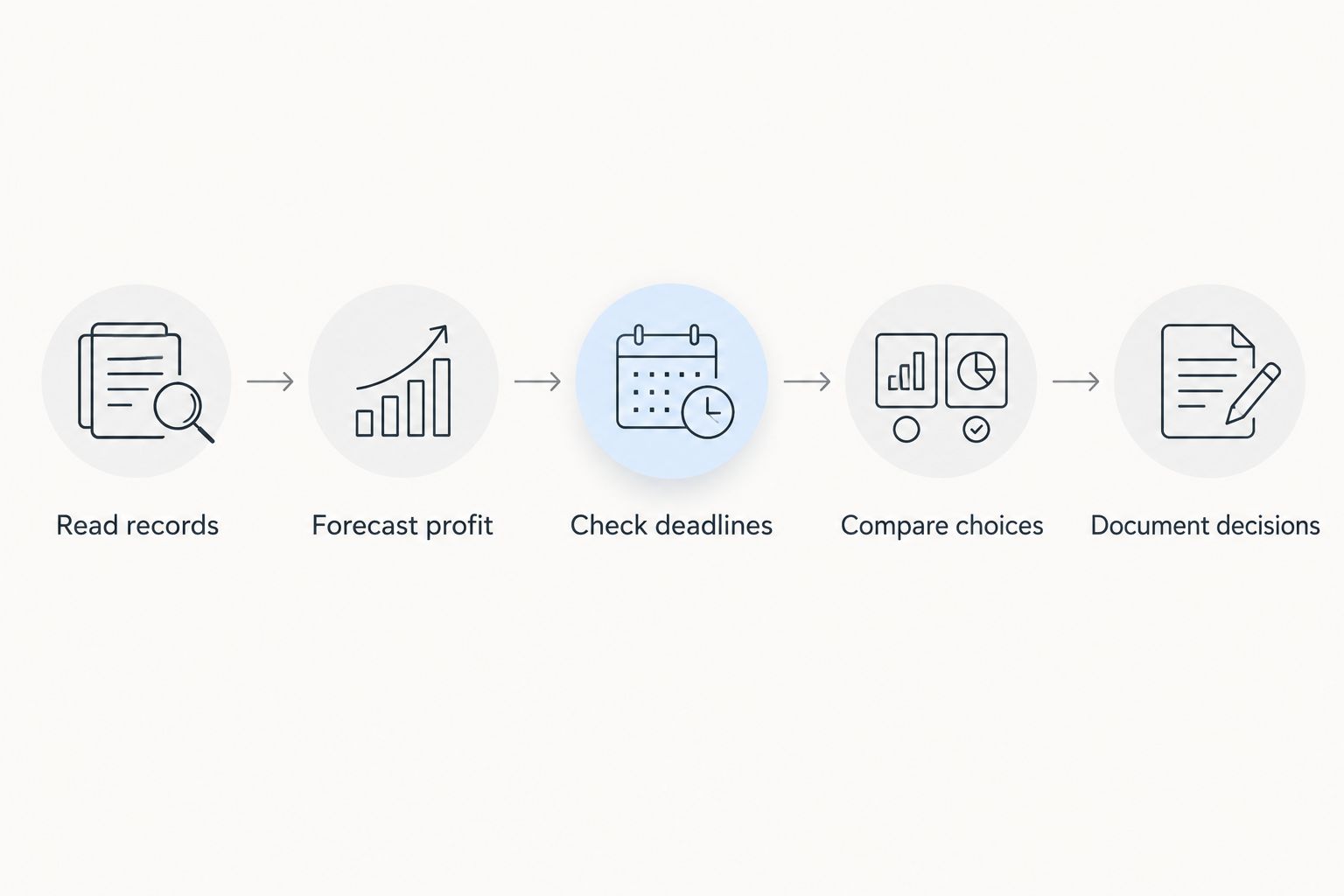
Use this sequence before choosing a tax-saving strategy:
- Read records. Reconcile bookkeeping, payroll, and business accounts.
- Forecast profit. Estimate taxable business income and the owner's related tax exposure.
- Check deadlines. Separate transaction deadlines from contribution, election, and filing deadlines.
- Compare choices. Evaluate tax treatment against cash needs and business purpose.
- Document decisions. Keep evidence of payments, delivery, business use, and approvals.
For the underlying records, start with the QuickBooks records to business tax planning workflow. A strategy built on unreconciled books starts with the wrong profit figure.
Why this matters
Tax planning changes decisions; tax preparation reports what happened. If you wait until preparation to discuss a purchase, payment, or payroll decision, the relevant transaction window might already be closed.
The reverse mistake is rushing into spending because December feels urgent. A deduction reduces taxable income; it does not reimburse the purchase. Preserve operating cash unless the expense serves a business need and qualifies under the applicable rules.
For 2026 planning, distinguish federal income tax from payroll obligations and state requirements. A decision that affects one does not automatically resolve the others.
Which business tax decisions still deserve a Q4 review?
The right starting point is your records, not a list of popular deductions. These are review areas rather than automatic recommendations.
| Review area | Best for | Potential benefit | Limitation or risk |
|---|---|---|---|
| Expense timing | Businesses with necessary upcoming expenses | Aligns eligible deductions with the relevant tax year | Prepayment does not always create an immediate deduction |
| Equipment purchases | Businesses that need operational assets | Identifies available depreciation treatment | Ordering alone does not establish placed-in-service status |
| Retirement contributions | Owners evaluating retirement savings | Coordinates eligible contributions with business income | Plan terms, compensation, and deadlines control eligibility |
| Tax payments | Owners whose profit or income changed | Identifies payment gaps before filing | A late payment does not erase an earlier underpayment |
| Payroll review | Businesses paying wages | Identifies reporting and withholding corrections | Payroll is separate from owner distributions |
Do not pursue every row. Select the areas that match actual transactions, then ask your tax professional to compare the treatment with and without the proposed action.
Expense timing: check your accounting method first
Cash-method businesses generally recognize income when received and deduct eligible expenses when paid, subject to exceptions. Accrual-method businesses follow different recognition rules. The IRS explains those distinctions in Publication 538, Accounting Periods and Methods.
That distinction controls the advice. Paying a bill early is not a universal deduction strategy, and sending an invoice later does not automatically move taxable income into another year.
Prepaid expenses, inventory, capital assets, and related-party transactions deserve separate review. Ask what rule applies to the specific payment rather than treating every bank withdrawal as a deductible expense.
Best for: businesses with necessary expenses whose payment timing is flexible. The benefit is deliberate timing; the drawback is using cash earlier without necessarily receiving an immediate deduction.
Equipment purchases: delivery is not the whole test
For depreciation purposes, equipment generally must be placed in service—ready and available for its intended business use. A purchase order, deposit, or invoice by itself does not establish that condition. IRS Publication 946, How To Depreciate Property, explains the placed-in-service framework.
For a calendar-year business seeking a 2026 deduction, confirm when the equipment will actually be ready for business use. Installation, configuration, and the asset's intended function belong in that discussion.
Keep the invoice, payment record, delivery information, and evidence of business use. If an asset serves both business and personal purposes, establish the business-use portion rather than assuming the entire purchase qualifies.
Best for: businesses that already need the equipment. Depreciation can affect the timing of deductions, but buying an unnecessary asset still reduces cash and creates ownership costs.
Retirement planning: separate setup from funding
Retirement-plan establishment, employee elections, payroll processing, and employer contributions are different actions. They do not share a universal December deadline. IRS Publication 560, Retirement Plans for Small Business, describes the rules for common small-business arrangements.
Start by identifying the existing plan, eligible employees, business compensation, and contributions already made. Then confirm which actions remain available under that plan's terms and applicable law.
Do not assume that a contribution deadline also permits a late employee deferral election. Likewise, do not rule out every retirement contribution simply because the tax year has ended.
Best for: owners who want retirement savings and can support the contribution without disrupting operations. The limitation is that retirement funding must fit eligibility, employee coverage, and access-to-cash requirements—not just the desired deduction.
Tax payments: review the shortfall before filing
A profitable quarter can change your payment needs even if nothing else about the business changes. Compare projected tax with estimated payments, withholding, and other applicable credits. For owners of pass-through businesses, include the owner's broader income situation.
An estimated-payment review is not the same as finding another deduction. Its purpose is to identify whether payments match the expected liability and whether underpayment rules need attention.
A filing extension gives you more time to file, not more time to pay. For 2026, keep the return deadline, payment deadline, and estimated-payment schedule as separate calendar entries.
Best for: owners whose profit, wages, investment income, or other income changed. The benefit is a clearer funding plan; the limitation is that a catch-up payment does not automatically eliminate penalties associated with earlier periods.
Why the available Q4 tax moves vary
Two profitable businesses can reach different answers because the underlying rules and transactions differ. Review these factors before accepting a recommendation:
- Tax year. A fiscal-year business does not necessarily close its tax year on December 31.
- Accounting method. Cash and accrual methods recognize transactions differently.
- Tax classification. Sole proprietorship, partnership, and corporate treatment affect reporting and owner compensation.
- Transaction status. A planned purchase differs from an asset already placed in service.
- Retirement-plan terms. Existing elections, eligible compensation, and employee participation affect available actions.
- Cash position. A deductible expense can still leave the business unable to meet payroll or other obligations.
The letters LLC do not answer all these questions. Confirm the business's federal tax classification before applying advice about wages, distributions, or retirement contributions.
Avoid treating an entity election as a last-minute shortcut. Eligibility, effective dates, filing requirements, and ongoing obligations need their own review.
What should I bring to a Q4 tax-planning meeting?
Bring records that explain profit, payments, and upcoming decisions. A bank balance alone cannot show taxable income, unpaid obligations, or the tax treatment of individual transactions.
Prepare this packet:
- A current profit-and-loss statement and balance sheet.
- Reconciled bank and credit-card accounts.
- Payroll reports and owner payment records.
- Estimated-tax and withholding records.
- Equipment purchases and planned acquisitions.
- Retirement-plan documents and contribution history.
- Outstanding tax notices and unresolved filing issues.
Label estimates separately from completed transactions. If your books contain unreconciled accounts or personal spending, flag those items before asking for a final projection.
Request a written action list with the responsible person, supporting documents, and actual deadline for each item. “Review deductions” is not an actionable instruction; “confirm whether this asset is ready for business use” is.
Can I still plan if I already owe the IRS?
Yes. Current-year planning and an existing IRS balance are separate workstreams, and both need attention. Reducing current taxable income does not, by itself, settle an older balance or resolve an outstanding notice.
Rutter Organization is a fit for individuals and businesses seeking tax resolution services. Tax resolution is one of its stated service areas; that makes it relevant when a year-end review exposes unresolved tax obligations, rather than as a substitute for confirming each planning deadline.
Before engaging Rutter Organization, define the issue: an unpaid balance, an unfiled return, or a notice requiring a response. Confirm the engagement's scope and who will handle current-year projections, bookkeeping, and return preparation.
The benefit of resolution support is help directed at the existing tax problem. Its boundary is equally important: a tax-resolution engagement does not automatically include every accounting or planning task.
Is December too late to make a business purchase?
December is not automatically too late, but a purchase must satisfy the rules for the deduction you seek. For equipment, confirm placed-in-service status rather than relying solely on the order or payment date.
If a supplier cannot make an asset ready for its intended use before year-end, do not assume payment secures the desired treatment. Have the tax professional assess the actual facts before you commit cash.
Can I wait until filing season to choose deductions?
You can claim qualifying deductions during return preparation, but filing season cannot retroactively create a transaction that needed to occur before year-end. Documentation supports what happened; it does not change when it happened.
Some elections and retirement contributions have later deadlines. Put those on a separate list instead of assuming that every opportunity expires with the tax year.
FAQ
Is it too late for business tax planning in Q4?
No—Q4 still allows business tax planning, but each action has its own deadline. Review projected income, accounting method, payments, and actual transactions before choosing a strategy.
What's the first thing I should do for year-end business tax planning?
Reconcile your books and prepare a profit projection first. A deduction strategy based on incomplete records can target the wrong income figure.
Does buying equipment before December 31 guarantee a deduction?
No—buying equipment before December 31 does not guarantee the deduction you expect. Depreciation generally requires the asset to be placed in service, and eligibility depends on the applicable rules.
Can I extend the deadline to pay by extending my business return?
No—a filing extension does not extend the deadline to pay income tax. Confirm the payment obligation separately from the return-filing deadline.
Can I make retirement contributions after the tax year ends?
Some retirement contributions can be made after the tax year ends, depending on the plan and applicable deadlines. Establishment requirements, employee elections, and employer funding are separate questions.
Should I spend extra money just to reduce business taxes?
No—spending solely for a deduction reduces cash without necessarily improving the business. Evaluate the business need, eligibility, and after-tax cash effect before paying.
Can Rutter Organization help if my planning review uncovers tax debt?
Rutter Organization provides tax resolution services to individuals and businesses. Confirm the engagement scope for the existing debt and keep current-year planning responsibilities explicit.
One last thing
The most useful year-end question is not “What can I write off?” It is “Which decision becomes unavailable if I wait?” That question separates genuine deadlines from spending pressure.
For your 2026 review, create two lists: actions required before the tax year closes and actions governed by later deadlines. Assign each item to a person and verify the rule before moving money.
This is general U.S. federal tax information, not individualized tax advice. Confirm current federal and state requirements for your business, accounting method, and tax classification.


